New Site Attendance Rules Are Here: Chain Store Managers Use DGX-HRMS to End Excel Scheduling Chaos
Frontline labor compliance requirements are tightening, and Excel scheduling keeps failing on temporary shift changes, leave approvals, and payroll reconciliation. DGX-HRMS provides systematic shift management, linking fixed shifts, rotating shifts, flexible shifts, and shift-change leave, and feeds back into attendance and payroll, helping you reduce manual checks and disputes.
Time & Payroll Suite
Attendance, Payroll and Access Control Solution for Cost Reduction and Productivity Gains Details
All‑in‑one automated timekeeping and payroll system with robust, secure processes to guarantee payroll integrity. Includes leave management, shift rostering, multi‑site and chain support, multi‑ledger accounting, and comprehensive modules.
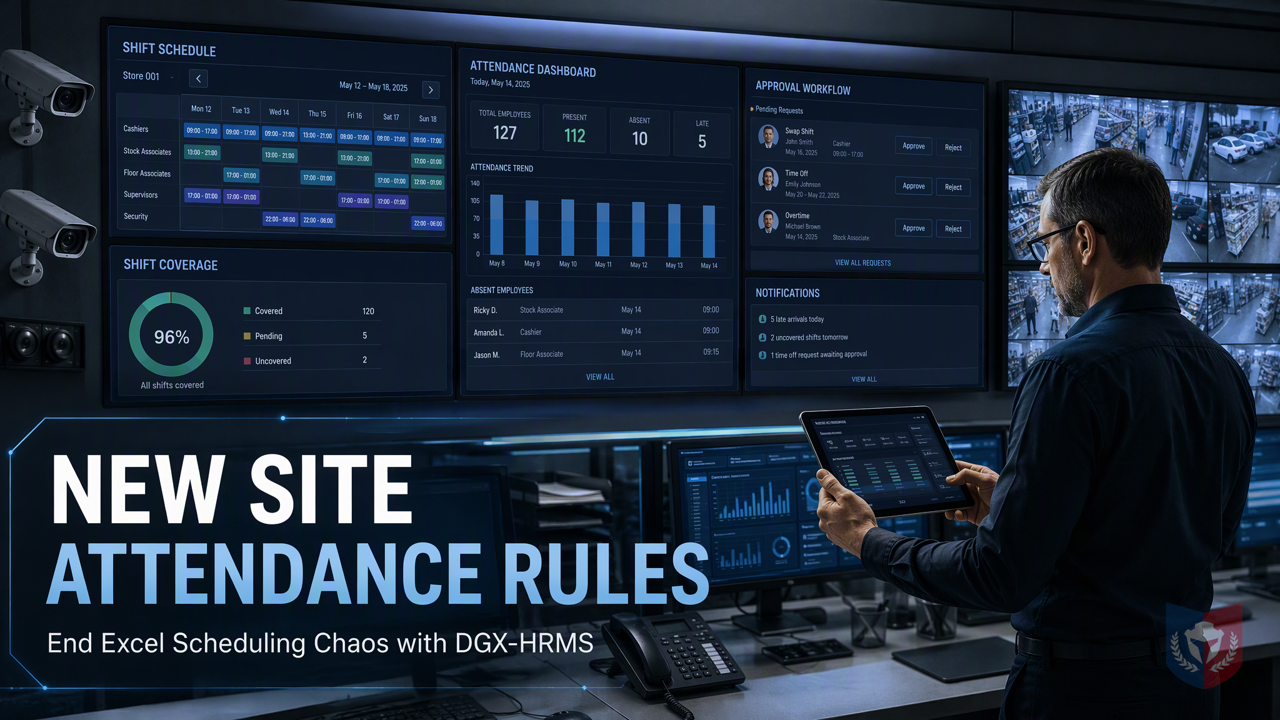
Site Attendance New Rules Arrive: Chain Store Managers Use DGX-HRMS to End Excel Scheduling Chaos
Recently, the "new site attendance rules" have become a hot topic in frontline management, with compliance requirements becoming increasingly strict, and chain retail store managers and scheduling managers are the first to be affected. When stores still rely on Excel for scheduling, temporary shift changes, leave requests, and month-end payroll often descend into chaos. This article uses a pain-point comparison format to break down three major breakdown scenarios and shares how DGX-HRMS shift management systematically handles fixed shifts, rotating shifts, and flexible shifts, links shift-change and leave approvals, and feeds back into attendance and payroll, helping you reduce manual verification and disputes.
1. The Three Major Breakdown Scenarios of Excel Scheduling
1. Temporary shift changes are hard to track
Frontline employees often need to change shifts due to unexpected situations. With verbal exchanges or messaging groups going back and forth, Excel versions proliferate. Store managers find it difficult to confirm the final arrangement, let alone record who swapped shifts with whom. When disputes arise afterward, each side often tells a different story.
2. Leave approvals are disconnected from scheduling
After employees submit leave requests, the approval results are not reflected on the schedule in real time. Store managers may still arrange staffing according to the old schedule, resulting in understaffing or overlaps. Only at month-end attendance do they discover that leave records do not match the schedule, requiring item-by-item verification.
3. Month-end attendance and payroll do not match
Excel schedules and actual clock-in records are handled separately, making changes such as overtime, shift changes, and leave easy to miss. Only during payroll do they discover that hours do not match, triggering employee complaints and increasing HR recalculation costs.
2. How Fixed Shifts / Rotating Shifts / Flexible Shifts Are Systematized
DGX-HRMS's scheduling management function allows store managers to set different shift types according to operational needs:
- Fixed shifts: Suitable for regular positions; set once for long-term use, reducing repeated input.
- Rotating shifts: Supports periodic rotation; the system automatically generates rotation schedules to ensure fairness and compliance.
- Flexible shifts: Quickly adjust start and end times in response to peak periods or unexpected needs, with the system updated synchronously.
All shift types are centrally managed within the system, and store managers can visually review staffing coverage to avoid overwork or understaffing.
3. How Shift Changes and Leave Approvals Are Linked
Employees can submit shift-change or leave requests through DGX-HRMS, and the system automatically notifies the relevant approvers. Once approved, the schedule is updated in real time and the affected periods are marked. Store managers no longer need to manually modify Excel, nor worry about version chaos. Approval records are fully retained for easy future reference, reducing disputes.
4. How Scheduling Feeds Back into Attendance and Payroll
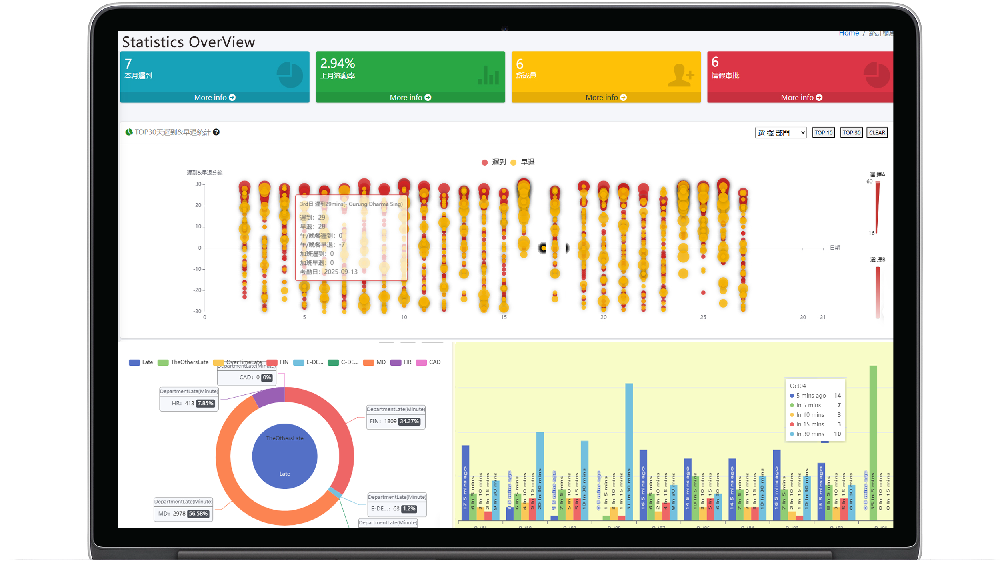
Schedules and attendance records are seamlessly connected. Employee clock-in data is automatically compared with scheduling arrangements, flagging anomalies (such as lateness, early departure, and absence). The system calculates working hours based on actual attendance and shift type, and incorporates changes such as shift changes, leave, and overtime into the payroll basis. Store managers and HR can export reports with one click, greatly reducing manual verification time and improving payroll accuracy.
5. CTA: Say Goodbye to Excel Chaos and Embrace Efficient Management
Facing the new site attendance rules and increasingly complex frontline management, rather than continuing to patch things up with Excel, why not experience DGX-HRMS's systematic scheduling management. Contact us now to book a free demo and learn how to end scheduling chaos, allowing store managers to focus on business growth.
Keywords: new site attendance rules, scheduling management, Excel scheduling, shift changes and leave, chain store managers
































Featured Reviews
No reviews yet. Be the first to leave one.
Write a review
Supports bold and lists; do not paste external scripts or images
0 / 2000
Visible after review