Chaotic Scheduling Dragging Down Attendance and Payroll? DGX-HRMS Helps HR Optimize Human Resource Management
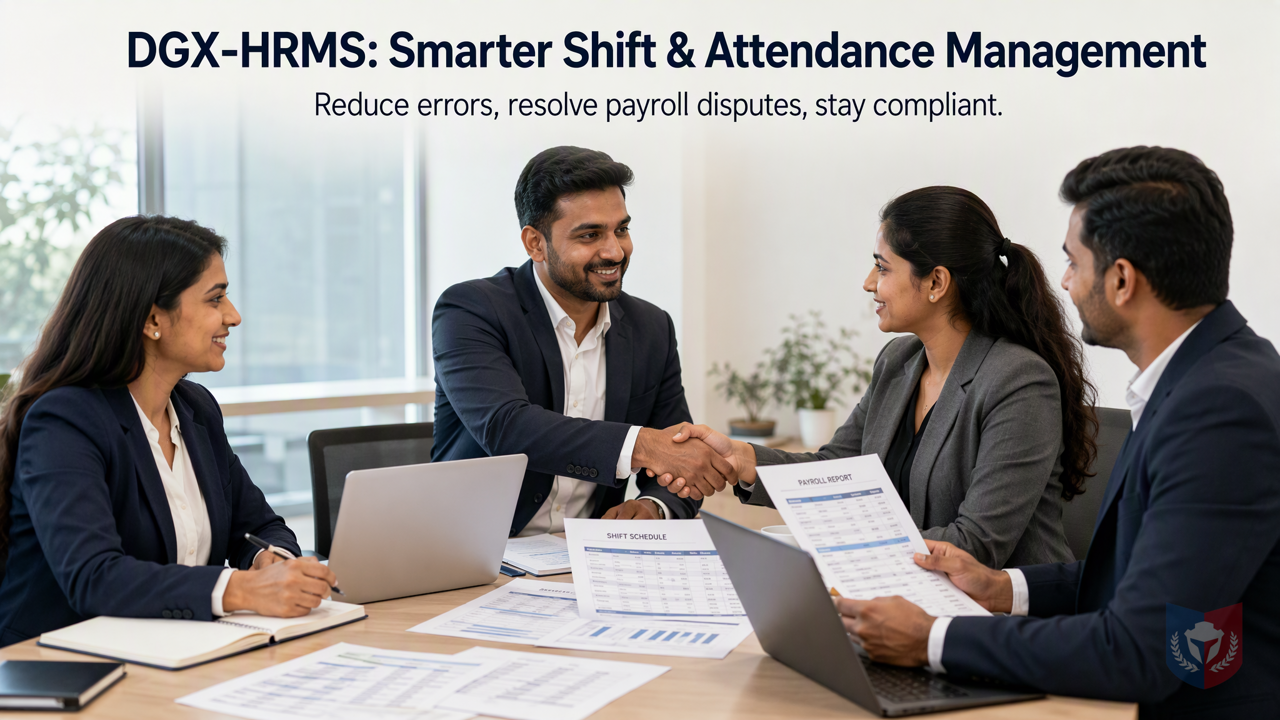
From an HR specialist's perspective, this analyzes how poor scheduling management leads to attendance errors and payroll disputes, and how DGX-HRMS's scheduling and flexible attendance features enable cost reduction, efficiency gains, and compliant operations.
Time & Payroll Suite
Attendance, Payroll and Access Control Solution for Cost Reduction and Productivity Gains Details
All‑in‑one automated timekeeping and payroll system with robust, secure processes to guarantee payroll integrity. Includes leave management, shift rostering, multi‑site and chain support, multi‑ledger accounting, and comprehensive modules.
Common Pain Points of Scheduling Chaos
For many HR professionals, scheduling management is often the most time-consuming and error-prone part of their daily work. Especially in industries such as retail, catering, and construction in Hong Kong, where the workforce composition is complex (full-time, part-time, hourly, dispatched) and shift types are diverse (fixed shifts, rotating shifts, flexible shifts), once scheduling becomes chaotic, it triggers a chain reaction of serious problems in attendance and payroll calculation. Common pain points include:
- Inconsistent schedule versions: Verbal or Excel scheduling leads to unsynchronized information; employees do not know the final schedule, and supervisors find it difficult to track.
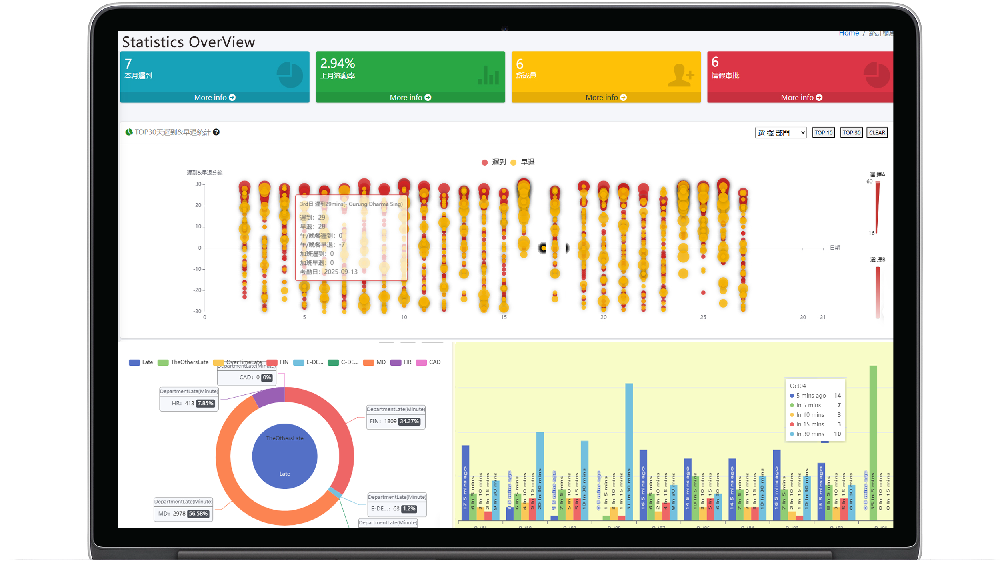
- Attendance record errors: Clock-in times are disconnected from the schedule, making it difficult to accurately determine lateness, early departure, and overtime, and HR needs to spend a lot of time verifying.
- Payroll calculation deviations: Attendance data errors directly affect payroll calculation, causing employee complaints and even labor disputes.
- Compliance risks: If regulatory requirements such as working hours, rest days, and overtime pay (require manual verification) are not accurately implemented, there may be fines or legal liability.
These pain points not only consume a great deal of HR effort but may also affect employee satisfaction and corporate reputation.
The Interconnected Relationship Between Scheduling, Attendance, and Payroll
Scheduling management is the cornerstone of the attendance system and payroll calculation. A clear scheduling plan enables the attendance system to accurately determine employees' attendance status (such as whether they clock in according to their shifts and the calculation of overtime hours), thereby ensuring payroll calculation is correct. Conversely, if scheduling is chaotic, attendance data loses its reference baseline, and payroll calculation will naturally be full of loopholes.
Take the shift system as an example. If the schedule is not updated in time, employees may attend according to the old schedule, while the attendance system judges based on the new schedule, leading to disputes over absenteeism or overtime. Therefore, scheduling, attendance, and payroll must be closely integrated to achieve efficient human resources management.
DGX-HRMS Scheduling Feature Highlights
DGX-HRMS attendance and payroll management system addresses the above pain points with the following core features (based on publicly available information on the official website):
Scheduling and Shift Management (B3)
- Supports multiple scheduling modes such as fixed shifts, rotating shifts, and flexible shifts to meet the needs of different industries.
- Visual schedule editing, quick copying, and batch adjustments reduce human errors.
- Employees can view schedules through the self-service platform, reducing communication costs.
Flexible Attendance Calculation (B2)
- Integrates multiple attendance methods such as GPS, clock-in, and sign-in to accurately record attendance times.
- Automatically compares schedules with actual attendance and marks anomalies (lateness, early departure, absence) in real time.
- Supports attendance calculation for multiple job types and multiple rules, flexibly adapting to complex scenarios.
Automated Payroll (B1)
- Attendance data is automatically imported into payroll calculation, reducing manual input errors.
- Supports multiple currencies, multiple accounts, and multiple settlement cycles, meeting the operational needs of Hong Kong and cross-regional operations.
Leave Application and Approval Process (B4)
- Employees apply for leave online, and after supervisor approval, schedules and attendance records are automatically updated.
- Leave balances are linked to payroll calculation to avoid over-taking leave or missed deductions.
Through these features, DGX-HRMS helps HR automate scheduling, attendance, and payroll processes, greatly reducing human errors and administrative burden.
Practical Recommendations for HR to Optimize Human Resources
To effectively optimize human resources management, HR can start from the following directions:
1. Implement an Integrated System
Choose a system like DGX-HRMS that integrates scheduling, attendance, and payroll to avoid data silos. The system should have features such as flexible approvals, permission management, and data security (such as asymmetric encryption) to ensure compliance and information security.
2. Standardize Scheduling Processes
Establish clear scheduling rules (such as announcing schedules one week in advance and setting up shift-swap application processes) and implement them through the system to reduce misunderstandings caused by verbal communication.
3. Make Good Use of Flexible Attendance and Automated Calculation
Use features such as GPS clock-in and automatic schedule comparison to detect and handle anomalies in real time. Automated payroll calculation not only saves time but also improves accuracy.
4. Regularly Review Compliance
Hong Kong labor regulations (such as the Employment Ordinance) have clear requirements for working hours, rest days, and overtime pay (require manual verification). HR should regularly review compliance status through system reports to avoid violations.
5. Employee Self-Service and Communication
Provide an employee self-service platform for checking schedules, attendance records, and payslips, reducing repetitive inquiries to HR and improving employee satisfaction.
Before and After Implementation Comparison
| Aspect | Before Implementation (Manual/Decentralized) | After Implementation (DGX-HRMS) |
|------|---------------------|---------------------|
| Scheduling operations | Excel scheduling, chaotic versions, time-consuming and error-prone | Systematic scheduling, visual editing, fast and accurate |
| Attendance records | Time cards/Excel, difficult to verify | Automated attendance, real-time anomaly alerts |
| Payroll calculation | Manual input, high error rate | Automatic attendance import, precise calculation |
| Compliance management | Manual checks, easy to miss | System report assistance, reduced risk |
| Employee communication | Verbal/email back-and-forth, low efficiency | Self-service platform, transparent and real-time |
Closing CTA
Scheduling chaos is no longer your human resources management pain point! DGX-HRMS attendance and payroll management system, through scheduling and flexible attendance features, helps you optimize processes, reduce errors, and improve compliance.
Book a free demo now to learn how DGX-HRMS can create a tailored, efficient human resources solution for your company.
Note: The regulatory requirements mentioned in this article are for reference only; specific compliance matters require manual verification.





























Featured Reviews
No reviews yet. Be the first to leave one.
Write a review
Supports bold and lists; do not paste external scripts or images
0 / 2000
Visible after review