Solving the Pain Points of Chain Retail Scheduling! DGX-HRMS Flexible Attendance and Payroll Management System Helps Store Managers Optimize Human Resources
Multi-store, multi-shift, and part-time scheduling are no longer a headache: the importance of scheduling to attendance and payroll systems, and a practical guide for HR on optimizing human resources
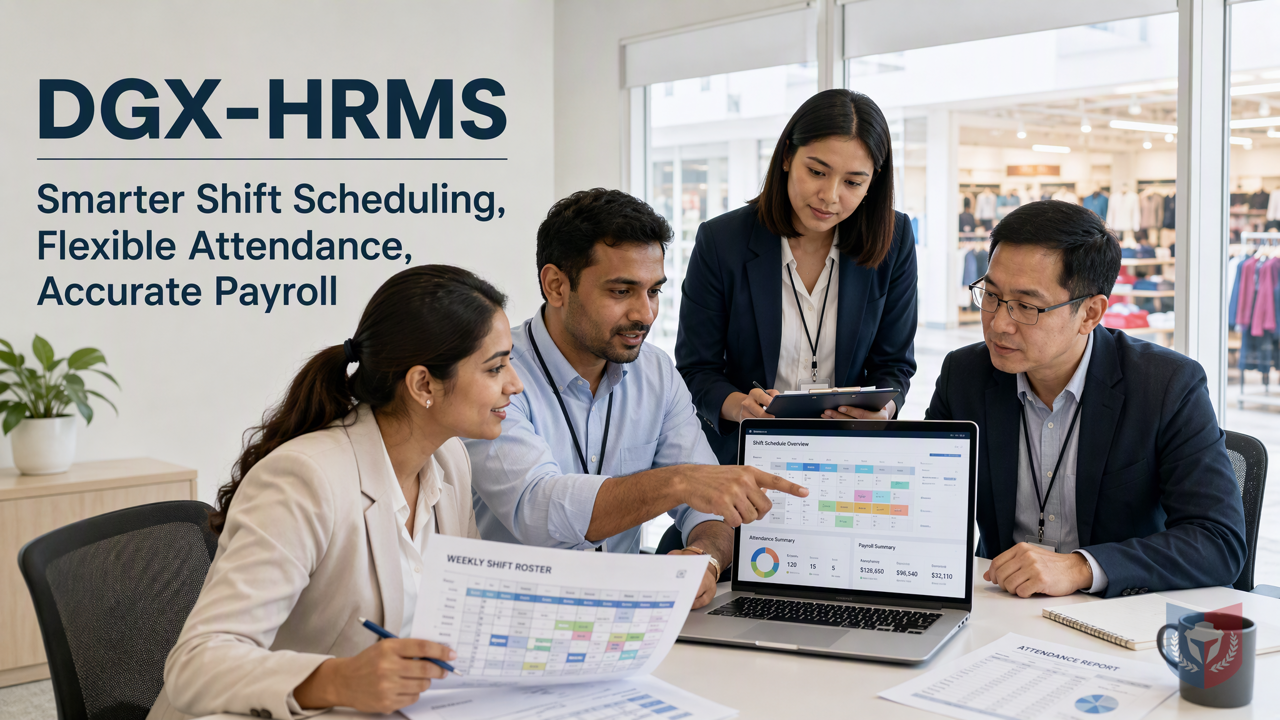
Time & Payroll Suite
Attendance, Payroll and Access Control Solution for Cost Reduction and Productivity Gains Details
All‑in‑one automated timekeeping and payroll system with robust, secure processes to guarantee payroll integrity. Includes leave management, shift rostering, multi‑site and chain support, multi‑ledger accounting, and comprehensive modules.
Common Challenges in Chain Retail Scheduling
Scheduling in the chain retail industry has always been a nightmare for store managers and HR. With many stores, a complex workforce structure (full-time, part-time, hourly, dispatched), frequent shift changes, and unexpected situations such as promotional periods, holiday peaks, and last-minute shift swaps, scheduling—something that seems simple—becomes exceptionally tricky. Common challenges include:
- Inconsistent scheduling standards across stores: Each store acts on its own, making it difficult for headquarters to manage uniformly, which easily leads to wasted or insufficient manpower.
- High turnover among part-time staff: Frequent schedule changes make manual records prone to errors, leading to deviations in attendance and payroll calculations.
- Difficult cross-store support scheduling: When employees temporarily support other stores, attendance records become chaotic, affecting payroll settlement.
- Scheduling disconnected from attendance: Schedules and actual clock-in records are inconsistent, forcing HR to spend a lot of time reconciling them, resulting in low efficiency.
If these problems are not resolved in time, they will directly affect employee satisfaction and operational efficiency, and may even lead to labor disputes.
The Chain Effect of Scheduling on Attendance and Payroll Systems
Scheduling is not simply about "who works when"; it is the foundation of attendance and payroll calculation. The importance of scheduling to attendance and payroll systems is mainly reflected in three aspects:
- Attendance accuracy: The schedule is the baseline for comparing actual attendance. If scheduling information is inaccurate, attendance records will be distorted, which in turn affects the determination of overtime, leave, and absence.
- Payroll calculation efficiency: The retail industry often uses hourly wages, where pay is directly tied to working hours. If schedule changes are not synchronized to the payroll system in real time, it is easy to underpay or overpay wages, causing employee dissatisfaction.
- Compliance risk: Working hours, rest days, overtime pay, and other matters are subject to regulatory requirements. Improper scheduling may violate labor laws and bring fines and reputational damage.
Therefore, a system that can seamlessly integrate scheduling, attendance, and payroll is key for chain retail enterprises to improve management efficiency.
DGX-HRMS Multi-Store Scheduling Feature Highlights
DGX-HRMS Attendance and Payroll Management System addresses the scheduling needs of the chain retail industry with the following core features:
Shift Scheduling Management (B3)
- Supports multiple scheduling modes such as fixed shifts, rotating shifts, and flexible shifts to meet the needs of different stores and positions.
- Provides a visual scheduling interface, allowing store managers to quickly drag and drop shifts and view manpower coverage in real time.
- Supports batch scheduling and template application, greatly reducing repetitive operation time.
- Allows setting scheduling rules (such as maximum working hours and rest intervals), with the system automatically checking for conflicts to reduce human error.
Flexible Attendance Calculation (B2)
- Supports multiple attendance methods such as GPS clock-in, mobile check-in, and Bluetooth/NFC to adapt to the multi-scenario needs of the retail industry.
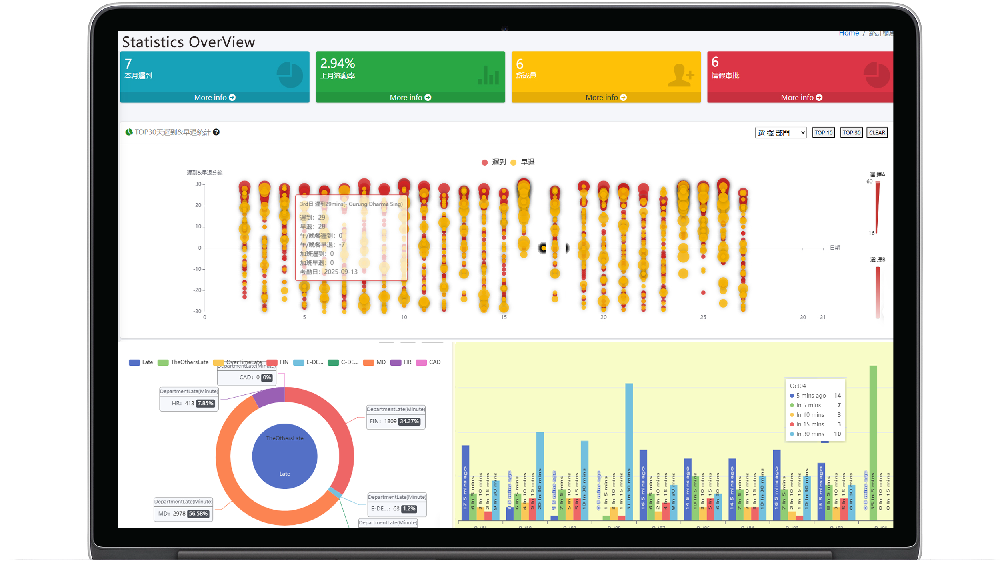
- Automatically compares schedules with actual attendance, marks exceptions in real time (late arrival, early departure, absence), and sends reminders.
- Flexibly handles cross-store support, temporary shift changes, and other situations, with attendance records automatically linked to the corresponding store and payroll items.
- Provides multi-dimensional attendance reports for HR to quickly reconcile and analyze.
Distributed Organizational Structure Management (B7)
- Supports multi-level organizational structures for chain enterprises, allowing headquarters to set unified scheduling policies while stores retain flexibility for adjustment.
- Hierarchical permission management: store managers can only manage their own stores, ensuring data security and management order.
- Real-time synchronization of scheduling and attendance data across stores, allowing headquarters to grasp the overall manpower situation at any time.
Specific Ways to Optimize Human Resources
To make scheduling truly help HR optimize human resources, chain retail enterprises are advised to take the following steps:
- Unify scheduling policies and processes: Through the central settings of DGX-HRMS, headquarters formulates scheduling rules (such as working hour limits and rest day arrangements), and each store follows them to ensure compliance and fairness.
- Integrate scheduling, attendance, and payroll data: Choose an integrated system like DGX-HRMS, where schedule changes are reflected in real time in attendance and payroll calculations, reducing manual reconciliation and errors.
- Make good use of flexible attendance tools: Encourage employees to use mobile clock-in, especially part-time and cross-store support staff, to improve the timeliness and accuracy of attendance records.
- Data-driven decision-making: Regularly analyze reports on scheduling efficiency, overtime trends, and labor costs to identify optimization opportunities, such as adjusting the proportion of part-time staff and improving shift arrangements.
- Employee self-service: Provide employees with self-service functions to check schedules, apply for shift changes, and view payslips, reducing HR administrative burden and improving employee satisfaction.
Conclusion and Call to Action
Is chain retail scheduling complex, with attendance and payroll prone to errors? DGX-HRMS provides shift scheduling, flexible attendance, and distributed management to help store managers optimize human resources and improve operational efficiency. If you are struggling with multi-store scheduling and payroll calculation, you are welcome to book a free demo to learn how DGX-HRMS can create a tailored solution for your business.
Compliance note: The regulatory-related content mentioned in this article requires manual verification; please consult professionals for specific applicability.































Featured Reviews
No reviews yet. Be the first to leave one.
Write a review
Supports bold and lists; do not paste external scripts or images
0 / 2000
Visible after review