IoT in Smart Buildings: Technology Trends and Case Studies
Exploring how IoT sensors, edge computing, and cloud platforms are transforming energy efficiency, comfort, and maintenance optimization in modern buildings

Time & Payroll Suite
Attendance, Payroll and Access Control Solution for Cost Reduction and Productivity Gains Details
All‑in‑one automated timekeeping and payroll system with robust, secure processes to guarantee payroll integrity. Includes leave management, shift rostering, multi‑site and chain support, multi‑ledger accounting, and comprehensive modules.
Introduction: Challenges in Site Attendance Management
In Hong Kong's construction industry, a site attendance system is not just a tool for recording worker hours—it is the backbone of compliance and payroll management. With the Construction Industry Council (CIC) mandating the CIC dual-register management system and worker registration, contractors must strictly adhere to regulations to avoid fines or work stoppages. Traditional manual methods, such as paper logs, are inefficient and prone to errors, leading to payroll disputes, compliance gaps, and management chaos.
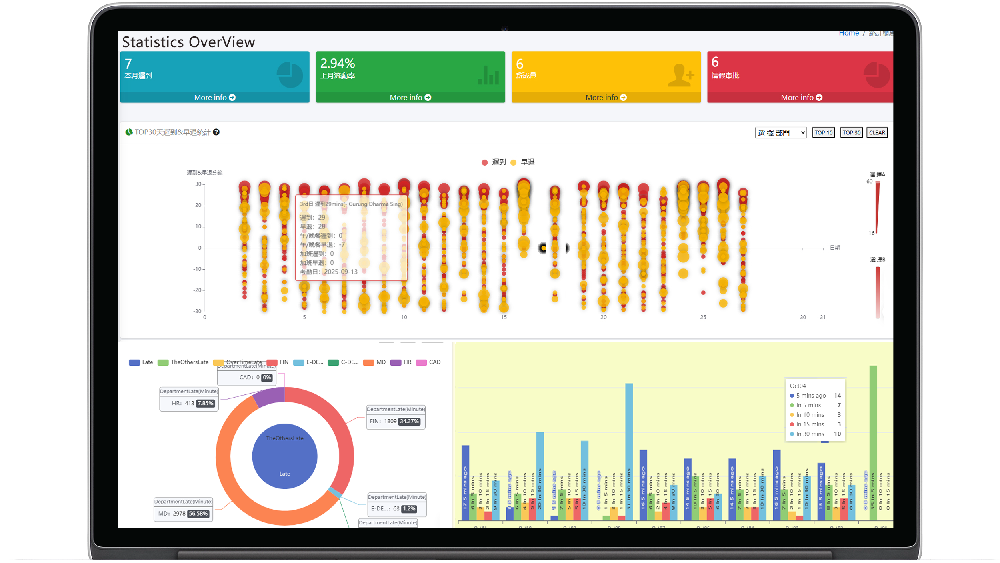
To address these pain points, DGX-HRMS introduces an intelligent site management platform tailored for the construction industry. This system integrates attendance tracking, automated payroll calculation, shift scheduling, and violation alerts, enabling paperless, automated operations.
Core Features: End-to-End Automation from Attendance to Payroll
1. Smart Card and Biometric Attendance
DGX-HRMS supports multiple attendance methods, including RFID site attendance systems, electronic card readers, and biometrics (fingerprint, facial recognition). Workers simply tap their card or scan their biometrics at site entry points, and the system automatically records their time and syncs with the CIC dual-register management system to ensure compliance.
2. Multi-Site and Multi-Subcontractor Integration
For main contractors managing multiple sites, DGX-HRMS provides a unified platform to consolidate attendance data across all locations. Whether for registered specialist contractors or subcontractors, the system clearly distinguishes employee affiliations and generates independent reports for easy oversight.
3. Automated Payroll Calculation Engine
The backend calculation engine supports multi-account, multi-branch, and multi-currency calculations. Based on attendance records, job types, hours worked, and overtime rules, the system automatically computes wages and generates detailed payroll reports. This dramatically reduces human errors and cuts calculation time from days to minutes.
4. Flexible Shift Scheduling and Violation Alerts
Managers can flexibly schedule shifts and set rules such as overtime caps and rest periods. When violations occur (e.g., excessive overtime or unregistered workers attempting to clock in), the system instantly alerts management, allowing timely correction and avoiding compliance risks.
Five Key Benefits of Automated Calculation
1. Reduce Human Errors, Improve Accuracy
Manual payroll calculations often lead to disputes due to transcription errors, missed hours, or misinterpretation of wage regulations. DGX-HRMS's automated workflow ensures every attendance record translates accurately into wages, eliminating manual mistakes.
2. Save Time and Labor Costs
Traditional attendance management requires dedicated staff to verify records, compute wages, and handle grievances. Automation offloads these tasks to the backend engine, freeing HR teams to focus on strategic initiatives.
3. Real-Time Compliance Monitoring
The system interfaces with the CIC dual-register management system, verifying worker registration status in real time. Any non-compliant action (e.g., an unregistered worker clocking in) is recorded and flagged, ensuring the site meets CIC requirements.
4. Minimize Payroll Disputes
Clear attendance records and transparent calculation logic allow workers and management to review payroll details at any time. This significantly reduces disputes arising from unclear wage calculations, fostering better labor relations.
5. Handle Complex Multi-Site, Multi-Currency Scenarios
Hong Kong's construction industry often involves multiple sites, diverse job types, and cross-border workers. DGX-HRMS's multi-account, multi-branch, multi-currency calculation capabilities effortlessly handle complex payroll structures without manual adjustments.
Compliance Management: Meeting CIC Dual-Register and Worker Registration Requirements
The CIC mandates that all sites use the CIC dual-register management system to record worker attendance and identity. DGX-HRMS, as a compliance monitoring platform, not only integrates with the CIC system but also offers additional features:
- Automatic Attendance Upload: Daily attendance data is automatically synced to the CIC platform, eliminating manual entry.
- Violation Alerts: When an unregistered worker or expired credential attempts to clock in, the system instantly blocks the entry and notifies management.
- Compliance Reports: Generate attendance reports that meet CIC standards, ready for audits anytime.
Real-World Case: Boosting Site Management Efficiency
A major main contractor implemented DGX-HRMS to consolidate attendance management across five sites. Previously, three employees spent a full week processing payroll; now the system completes it automatically, requiring only two hours for review. Meanwhile, CIC compliance audit pass rates rose from 85% to 100%, and payroll disputes decreased by 90%.
Conclusion: Embrace Smart Management for a Competitive Edge
In an era where compliance and efficiency are paramount in Hong Kong's construction industry, the DGX-HRMS site attendance system is more than a tool—it is a key to competitiveness. By automating payroll, enabling real-time compliance monitoring, and integrating multiple sites, companies can focus on core business rather than administrative burdens.
Contact us today for a demo and see how DGX-HRMS can transform your site management into a smart, automated operation!
































Featured comments
No comments yet. Be the first.
Leave a comment
Bold and lists OK; no external scripts or images
0 / 2000
Comments appear after moderation