A Guide to Selecting an Attendance and Payroll Management System: Feature Comparison and Implementation Tips
How to choose the right attendance and payroll system for your business? This article compares key features, deployment options, and integration capabilities, and provides practical selection steps and implementation advice.
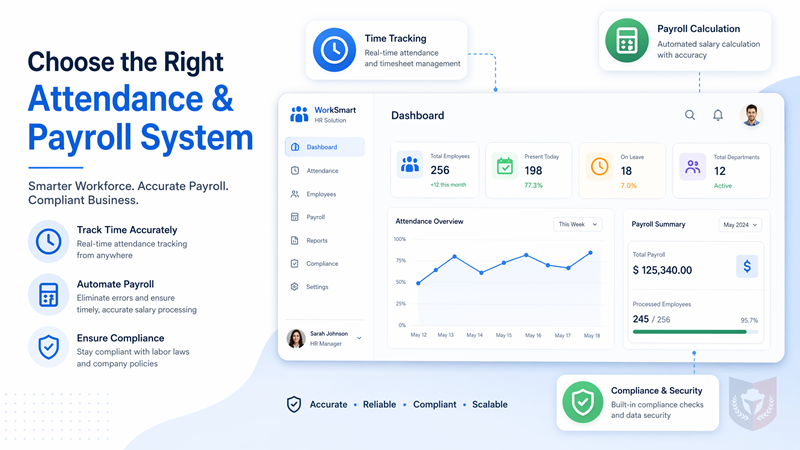
Time & Payroll Suite
Attendance, Payroll and Access Control Solution for Cost Reduction and Productivity Gains Details
All‑in‑one automated timekeeping and payroll system with robust, secure processes to guarantee payroll integrity. Includes leave management, shift rostering, multi‑site and chain support, multi‑ledger accounting, and comprehensive modules.
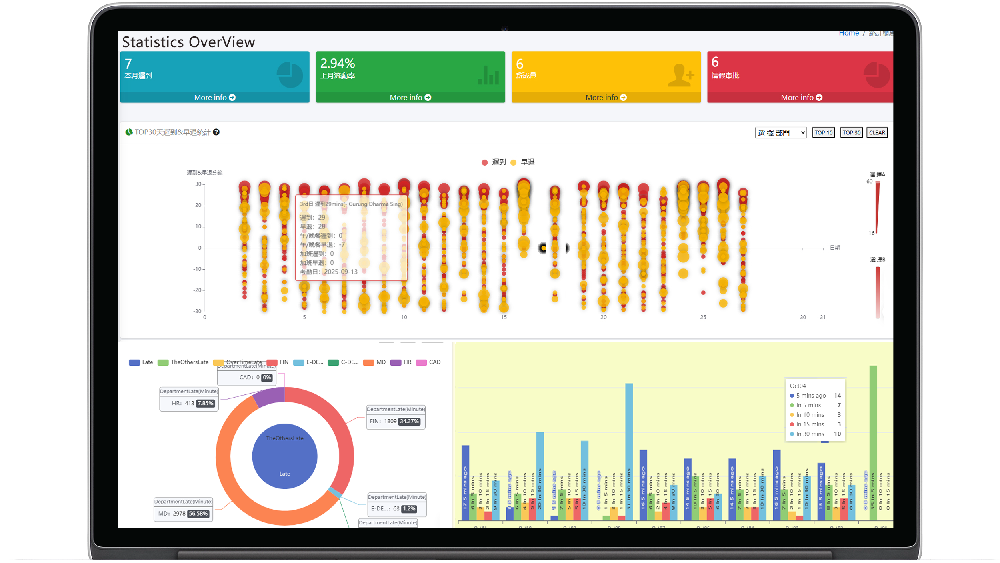
Integrated Smart Building Security Solution: Enhancing Safety Management Efficiency
In modern cities, smart buildings have become the norm, and the integration of security systems is key to ensuring safe operations. Traditional security systems often consist of standalone CCTV, access control, and alarm systems, each operating independently, leading to low management efficiency and slow emergency response. To address this challenge, an integrated smart building security solution emerges, consolidating multiple subsystems into a single platform for centralized monitoring and unified management, significantly enhancing safety management efficiency.
Core Value of the Integrated Solution
1. Centralized Monitoring, Eliminating Information Silos
In the past, property managers had to separately review CCTV feeds, process access control logs, and monitor alarm signals, which was time-consuming and prone to missing critical information. The integrated solution aggregates data from all subsystems into a single dashboard. Through the AI-GUARD platform, managers can view camera images, door statuses, and alarm events in real time. For instance, when an alarm is triggered, the system automatically associates the nearest camera feed, helping managers quickly assess the situation.
2. Intelligent Linkage, Boosting Emergency Efficiency
The core of the integration lies in linkage. For example, when the access control system detects unauthorized entry, AI-GUARD can automatically trigger an alarm, lock down relevant doors, and push the live CCTV feed to the manager’s mobile phone. This automated response mechanism reduces average emergency handling time from minutes to seconds, significantly lowering security risks.
3. Data Analytics, Optimizing Security Strategies
The integrated platform is not just a monitoring tool but also a data analytics center. With AI-GUARD’s intelligent analysis capabilities, the system can identify patterns in historical events, such as abnormal entry behaviors or high-frequency alarm zones. Property management companies can use these insights to adjust patrol routes or enhance monitoring in specific areas, continuously optimizing security strategies.
Technical Architecture: How AI-GUARD Achieves Integration
AI-GUARD adopts a modular design that is compatible with mainstream security devices, ensuring seamless integration. Its technical architecture consists of three layers:
- Perception Layer: Includes terminal devices such as CCTV cameras, access card readers, and infrared detectors, responsible for collecting raw data.
- Transmission Layer: Transmits data to the central server via wired or wireless networks (e.g., TCP/IP, Wi-Fi, LoRa).
- Application Layer: AI-GUARD provides a unified user interface for device management, event monitoring, linkage rule configuration, and report generation.
For example, a commercial building deployed AI-GUARD to integrate 200 cameras, 50 access points, and 30 alarm sensors into one platform. Managers can log in to view the status of all devices and set linkage rules, such as “when an alarm is triggered, automatically record relevant camera video and send a notification.”
Success Story: Transformation of a Property Management Company
Before adopting the AI-GUARD integrated solution, a Grade-A office building in Hong Kong had independent security systems, requiring managers to operate three different software interfaces simultaneously. After integration, management efficiency increased by 60%, and emergency response time decreased by 70%. More importantly, the system’s intelligent analysis helped the property management company detect multiple suspicious loitering events in the underground parking lot, allowing them to adjust the monitoring layout and prevent potential theft.
Target Audience: Property Management Companies and System Integrators
This solution is specifically designed for property management companies and system integrators. For property managers, the integrated solution simplifies daily operations and reduces labor costs; for system integrators, AI-GUARD’s open API and extensive device compatibility enable rapid customization of solutions for clients, enhancing competitiveness.
Conclusion
An integrated smart building security solution is no longer a futuristic concept but a practical tool for enhancing safety management efficiency. Through the AI-GUARD platform, property management companies and system integrators can easily achieve seamless integration of CCTV, access control, and alarm systems, creating a safer and more efficient smart building environment. Deploy the integrated solution today and usher in a new era of intelligent security management.
Featured comments
No comments yet. Be the first.
Leave a comment
Bold and lists OK; no external scripts or images
0 / 2000
Comments appear after moderation