2026 Outlook for Breakthroughs in the Food and Beverage Industry: DGX-HRMS Digital Tools Break Through the Wave of Closures, Overcoming Human Resource Management Barriers with a Light Asset Model
DGX-HRMS avoids the trap of heavy investment with its asset-light model, solves the pain points of payroll management with its flexible functions, and adapts to enterprise development with its flexible approval process. It helps catering companies cross the threshold of human resource management and achieve cost reduction and efficiency improvement, and break through the downturn in a market with high costs.
Time & Payroll Suite
Attendance, Payroll and Access Control Solution for Cost Reduction and Productivity Gains Details
All‑in‑one automated timekeeping and payroll system with robust, secure processes to guarantee payroll integrity. Includes leave management, shift rostering, multi‑site and chain support, multi‑ledger accounting, and comprehensive modules.
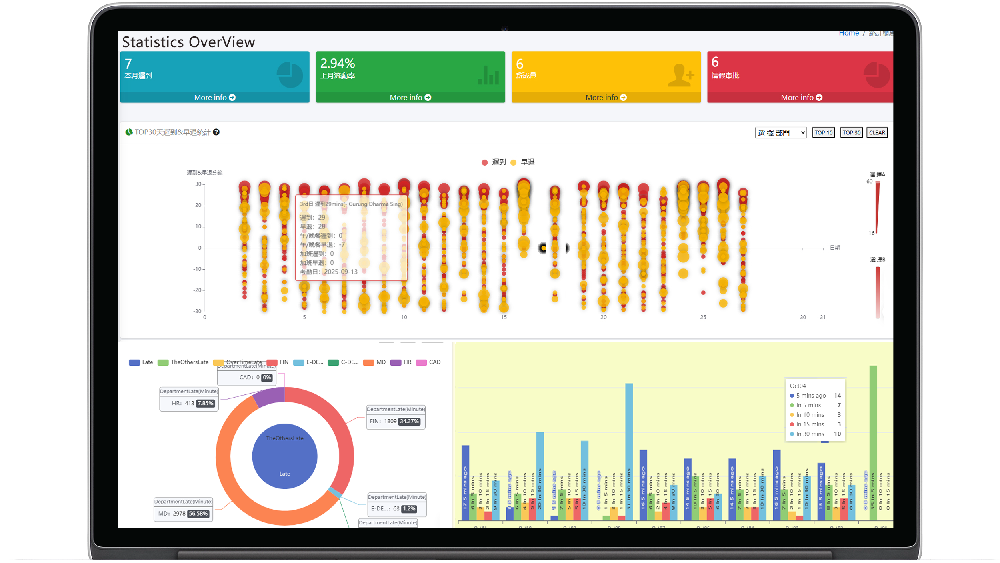
2026 Catering Industry Outlook: DGX-HRMS Digital Tools to Overcome Closure Wave, Bridging Human Resource Management Barriers with an Asset-Light Model
The closure wave in Hong Kong's catering industry in 2025 is more devastating than during the pandemic. During the pandemic, government subsidies became a lifeline for the industry, allowing many restaurants to weather the storm. Now, with subsidies completely withdrawn, labor costs have surged by 45% compared to three years ago (dishwashers' monthly salaries have exceeded HK$15,000, and the vacancy rate for core positions has reached 35%), and rental costs remain high (monthly rent for shops in prime commercial areas reaches HK$250,000). Under these multiple pressures, more and more small and medium-sized catering establishments are facing the crisis of closure. During industry downturns, the key to breaking through operational bottlenecks lies not in passively cutting costs, but in proactively adopting advanced management tools to achieve an efficiency revolution. Human resource management has always been paramount in the catering industry, and also a difficult hurdle to overcome. Only by using technology as an advanced productivity tool and undergoing digital transformation can the disastrous business cycle be reversed.
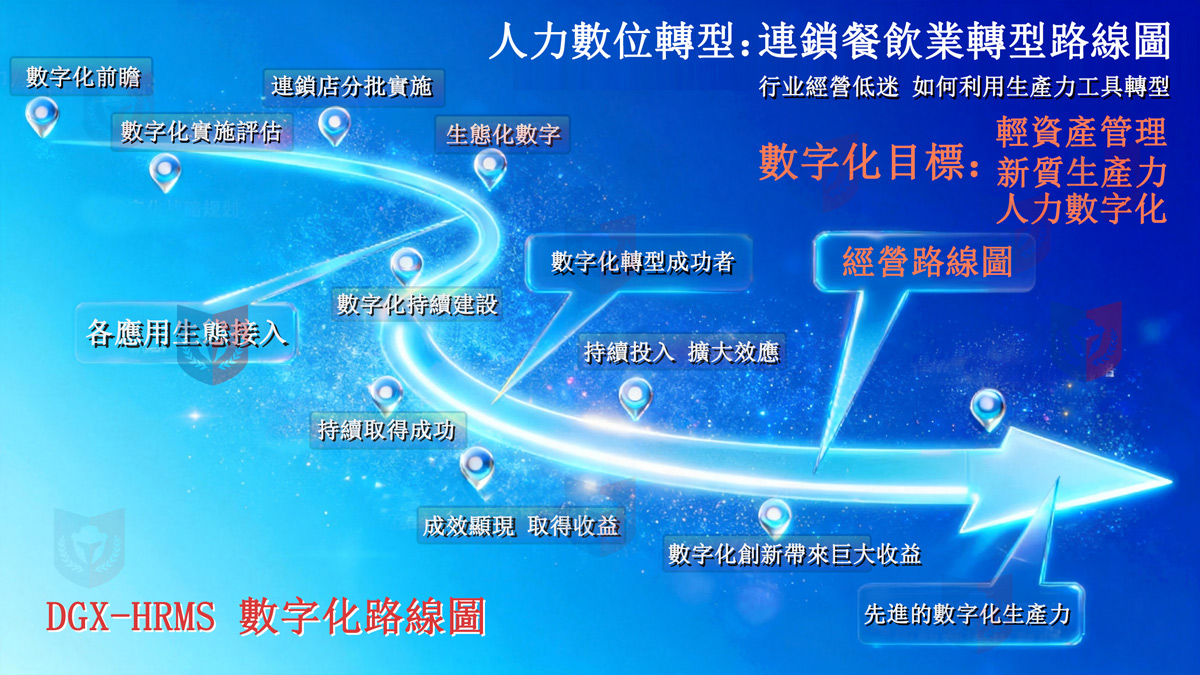
I. Avoiding the "Heavy Asset Pitfall" in Digital Transformation: Lightweight Choices Match the Survival Realities of the Catering Industry
The most common pitfall for the catering industry in the digital transformation of human resources is "heavy assetization": blindly purchasing expensive local servers, developing customized software, and equipping dedicated IT teams, ultimately investing hundreds of thousands of dollars only to have the system become "ornamental" due to excessive functionality and high maintenance costs. In fact, by 2025, the catering industry needs "asset-light, highly flexible" digital solutions—the key being to keep investment within budget while matching the actual needs of the business at different stages of development.
Lightweight Digitalization Pathways for Catering Enterprises of Different Sizes
- Small Restaurants (5-20 employees): Choose the cloud-based SaaS model of DGX-HRMS. No hardware purchase is required; core functions (attendance, payroll, compliance reporting) are enabled with a monthly subscription fee of a few hundred yuan, avoiding huge upfront investments.
- Medium-sized Chain Stores (20-100 employees): Add customized modules (such as multi-store scheduling, employee performance linkage) to the cloud platform, expanding services according to the actual number of users to avoid wasting functionality.
- Large Groups (100+ Employees): Adopting a "cloud integration + on-demand development" model, DGX-HRMS is integrated with existing POS and financial systems while retaining room for functional expansion. This avoids redundant construction and meets the group's management and control needs.
This "phased matching" digital strategy allows catering businesses to solve current pain points (such as the confusion surrounding part-time payroll) at minimal cost, and gradually upgrade functionality as they scale, truly achieving "cost reduction through technology, rather than investment in technology."
II. Solving Paidness Issues in Payroll Calculation: DGX-HRMS Addresses Complex Scenarios in the Food and Beverage Industry with "Simple Algorithm + Flexible Add-ons"
Paidroll calculation in the food and beverage industry has always been a major challenge for human resource management: part-time and full-time employees coexist, allowances are numerous, leave rules are complex, and the frequent occurrence of sudden layoffs makes manual calculation not only time-consuming and labor-intensive but also highly prone to errors and compliance risks. DGX-HRMS, designed specifically for the characteristics of the food and beverage industry, uses a "simplified algorithm framework + flexible add-ons" approach to effectively solve this problem.
1. Simplified Algorithm for Payroll Calculation: Covering Complex Scenarios with Standardized Rules
Addressing the issues mentioned in the attached charts, such as "complex calculation rules and time-consuming manual data matching," DGX-HRMS breaks down common payroll items in the catering industry into "basic rules + configurable parameters," achieving "one-time configuration, automatic calculation":
- Basic Wage Calculation: Supports multiple modes including hourly, daily, and monthly wages, automatically matches employee type (full-time/part-time/hourly), and calculates basic compensation based on actual attendance data;
- Automated Allowances and Bonuses: Pre-set common allowances in the catering industry (meals, housing, communication), with customizable payment conditions (e.g., full attendance bonus requires ≥26 days of attendance per month), and real-time linkage with attendance data;
Leave Pay Rules: Built-in Hong Kong labor regulations, automatically calculating pay standards for maternity leave, paternity leave, annual leave, etc.—for example, maternity leave pay is based on the employee's average salary for the previous 12 months. It also supports customizable items such as "10 months of baby formula subsidy," eliminating the need for manual calculation.
2. Flexible Additions for Special Scenarios: Covering Complex Needs such as Leave, Termination, and Reimbursement
Payroll management in the catering industry is not just about "calculation," but also includes balancing and settling numerous special scenarios. DGX-HRMS's "Additional Item Configuration" function enables full-process digitalization:
- Leave-Related Allowances: In addition to statutory holiday pay, companies can add custom items such as "Paid Maternity Leave" (e.g., an additional 5 days of fully paid leave) and "Postpartum Return-to-Work Allowance" to the system. After parameter settings, these items are automatically added to payroll details;
- Payment Settlement for Immediate Termination: Addressing the frequent occurrence of immediate terminations in labor-intensive industries, the system supports "real-time calculation on the day of termination":
- 1. Automatically aggregate outstanding employee compensation (actual attendance wages, unused annual leave compensation, overtime pay);
- Calculate economic compensation/damages according to legal requirements (legal dismissal is paid based on N months' salary according to years of service; illegal dismissal is paid as 2N damages);
- Balance financial income and expenditure: If employees have outstanding advances (such as purchasing 100 yuan worth of A4 paper), a "Deadline Payable" item can be added directly to the severance pay, and settled together with wages and compensation, without requiring additional financial procedures;
- Expense Reimbursement and Advance Management: Supports employees submitting expense reimbursement requests (such as for purchasing ingredients or equipment maintenance), and also allows partial salary advances (such as emergency loans for employees). All items are linked to the payroll system and automatically added to the monthly payroll details, avoiding omissions due to manual verification.
III. Flexible Approval Strategy: Unlimited Levels and Branches to Match the Dynamic Development of Catering Enterprises
The organizational structure of catering enterprises is not fixed: small stores may only have a two-level structure of "owner-employee," while large chain groups involve multi-level management of "headquarters-regional-store-department." DGX-HRMS's "unlimited branching and unlimited level approval" function can adjust the approval process according to the size of the enterprise, achieving flexible management throughout the entire lifecycle.
1. Flexible Configuration of Approval Process
- Small Businesses (Single User Approval): For smaller businesses, a single approver (e.g., store manager) can be set up. All payroll applications (overtime, expense reimbursements, leave) are submitted directly to the store manager, completing the approval process in one step and avoiding redundancy.
- Medium-Sized Businesses (Multi-Branch Approval): As stores expand, a two-tier approval system ("Store Manager → Regional Manager") can be set up. Applications from different stores are routed to the corresponding manager, ensuring meticulous management.
- Large Group (Multi-Level Linked Approval): Supports multi-level approval from "Employee Submission → Department Head → Store Manager → Regional Finance → Headquarters HR," and allows setting "conditional branches" (e.g., reimbursements ≥ 10,000 RMB require headquarters finance approval), while retaining approval records for traceability.
2. Dynamic Adjustment with Enterprise Development
DGX-HRMS's approval system can be adjusted without redevelopment: When an enterprise adds stores or expands its organizational structure, it only needs to add approval nodes and configure permissions in the backend to quickly adapt to new management needs—for example, when expanding from a "single store" to "5 chain stores," a "Regional Director" approval level can be added without changing the system or incurring additional costs.
IV. DGX-HRMS: A "Light Asset, Highly Adaptable" Choice for HR Digitalization in the Catering Industry
Unlike general-purpose HR software, DGX-HRMS addresses the pain points of the catering industry. With its "light asset deployment, full-scenario coverage, and flexible expansion" characteristics, it has become a key tool for companies to turn the tide during the 2025 wave of closures:
- Light Asset Model: Deployed as a cloud-based SaaS platform, requiring no hardware investment and charging based on usage, perfectly suited to the cash flow challenges of the catering industry;
- Comprehensive Payroll Management: From basic calculations to special scenarios (layoffs, expense reimbursements, leave allowances), it uses simplified algorithms to solve complex problems, eliminating human error;
- Flexible Approval and Expansion: Approval processes can be adjusted to adapt to changes in business size and organizational structure, avoiding the predicament of "systems failing to keep pace with business development."
In the brutal operating cycle of the catering industry in 2025, the digital transformation of human resources is not a "choice," but a "survival question." DGX-HRMS avoids the trap of heavy investment with its asset-light model, solves the pain points of payroll management with flexible functions, and adapts to business development with flexible approval, helping catering companies overcome the threshold of human resource management and achieve cost reduction and efficiency improvement in a high-cost market, breaking through against the trend.






Featured comments
No comments yet. Be the first.
Leave a comment
Bold and lists OK; no external scripts or images
0 / 2000
Comments appear after moderation