AI Reshaping Hong Kong Corporate Recruitment: Balancing Efficiency and Integrity

Time & Payroll Suite
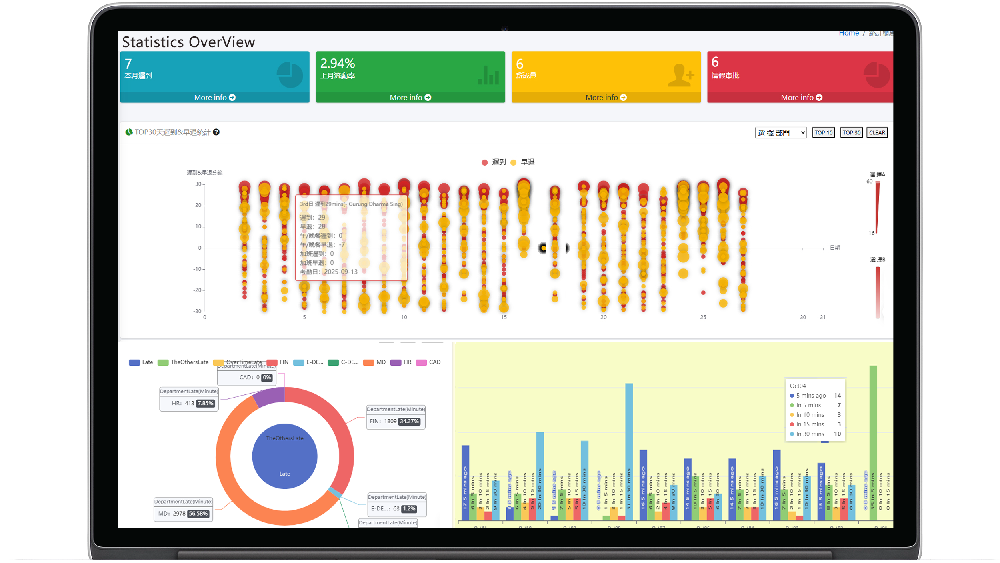
Attendance, Payroll and Access Control Solution for Cost Reduction and Productivity Gains Details
All‑in‑one automated timekeeping and payroll system with robust, secure processes to guarantee payroll integrity. Includes leave management, shift rostering, multi‑site and chain support, multi‑ledger accounting, and comprehensive modules.
AI Reshaping Hong Kong Corporate Recruitment: Balancing Efficiency and Integrity
Artificial intelligence (AI) is profoundly revolutionizing how businesses operate globally, and Hong Kong's recruitment process is also undergoing significant changes.

Before the advent of generative AI such as ChatGPT, AI technology was already widely used in recruitment. While not as powerful as it is today, it injected efficiency into HRMS (Human Resources Management Systems) through capabilities like automated resume screening and initial interviews. Many Hong Kong companies have leveraged these HR systems to significantly shorten talent matching cycles and reduce manual intervention costs. With the continuous evolution of AI technology, the recruitment process is becoming increasingly intelligent, becoming a crucial aid for HR departments in addressing Hong Kong's fierce competition for talent and alleviating the pressure of talent shortages.
However, the rapid development of the new generation of AI technology has led to a crisis of trust in once-popular intelligent recruitment tools.
AI-based fraud in the job search process is becoming increasingly prominent and is a common occurrence in the recruitment process of Hong Kong companies. Of particular note is the new generation of graduates' proficiency in AI tools, enabling them to easily use generative AI to embellish resumes, instantly generate interview responses, and even circumvent assessments in online competency tests. This behavior not only severely undermines the reliability of the recruitment process but also forces Hong Kong HRMS vendors to re-examine their technical architectures and urgently develop preventative measures. This is a source of deep concern for companies – if they inadvertently hire unqualified talent, it will not only drive up internal training costs and disrupt normal business operations, but could also ultimately cause irreparable damage to product quality and brand reputation.
From AI-embellished resumes to online test fraud, the continued advancement of Large Language Models (LLMs) has made even real-time remote interviews vulnerable to AI-enabled fraud. This problem is particularly acute in Hong Kong: while most local HRMS systems integrate online recruitment modules, early designs generally lack safeguards against AI-enabled fraud, leaving them vulnerable to exploitation.
Faced with this challenge, a significant trend has emerged among Hong Kong companies: HR departments are proactively reducing the number of online elements in the recruitment process.
While this means additional time and labor costs, it remains a more pragmatic option than the long-term losses associated with hiring unqualified talent. In the highly competitive Hong Kong market, many companies prefer to invest more manpower in verification to ensure the credibility of their hiring results.
The response strategies vary significantly among companies of different sizes. For resource-constrained small and medium-sized enterprises (SMEs), the solution is more direct and efficient.
Given their limited recruitment scale and the predominance of local employees, simply replacing online processes with face-to-face negotiations can effectively prevent AI fraud. Furthermore, Hong Kong SMEs often use simpler HRMS systems with low levels of automation, so this process adjustment does not impose a significant operational burden.
Large enterprises and multinational corporations face a dilemma. Relying on global networks for recruitment, particularly through remote positions to attract low-cost labor from regions like India and Vietnam, is their core competitive advantage against smaller regional competitors in Hong Kong, a high-cost region.
Therefore, completely abandoning online processes and adopting a fully in-person interview model is unrealistic, which further increases the challenges faced by large Hong Kong companies in managing HR systems in the AI era.
To address this challenge, HRMS service providers have begun upgrading their technology, with a key focus on strengthening AI-driven data analysis capabilities. By integrating massive amounts of industry data, job requirements, and talent quality data, the system can autonomously perform talent matching and qualification review, eliminating the need for professional analysis by professional managers and enabling core HR managers to accurately select outstanding professionals. Furthermore, based on the core concept that "human resources are a company's valuable asset," the system incorporates a "regular physical checkup"-like asset maintenance approach. Drawing on the core logic of KPI assessment, AI is used to continuously track and dynamically analyze HR status, continuously optimizing talent management strategies and providing companies with targeted and forward-looking HR recommendations.
For example, some HRMS vendors have added optional AI fraud detection plug-ins to their recruitment modules, which can intelligently verify the authenticity of applicant resumes and the authenticity of interview responses. Pilot applications with the first batch of Hong Kong customers have already yielded positive initial results. At the same time, service providers also clearly recognize that the evolution of AI technology is an ongoing dynamic process. Therefore, iterative upgrades of fraud detection tools will become the norm to continuously enhance the reliability of HRMS systems in the AI era and help Hong Kong companies find the optimal balance between efficiency and integrity.
Tony































Featured comments
No comments yet. Be the first.
Leave a comment
Bold and lists OK; no external scripts or images
0 / 2000
Comments appear after moderation