DGX-HRMS Attendance and Payroll System Leave Type Setting Strategy
It offers highly flexible, configurable, and compliant vacation type setting strategies, enabling companies to not only automate tedious administrative tasks but also achieve refined management of human resource strategies.
Time & Payroll Suite
Attendance, Payroll and Access Control Solution for Cost Reduction and Productivity Gains Details
All‑in‑one automated timekeeping and payroll system with robust, secure processes to guarantee payroll integrity. Includes leave management, shift rostering, multi‑site and chain support, multi‑ledger accounting, and comprehensive modules.
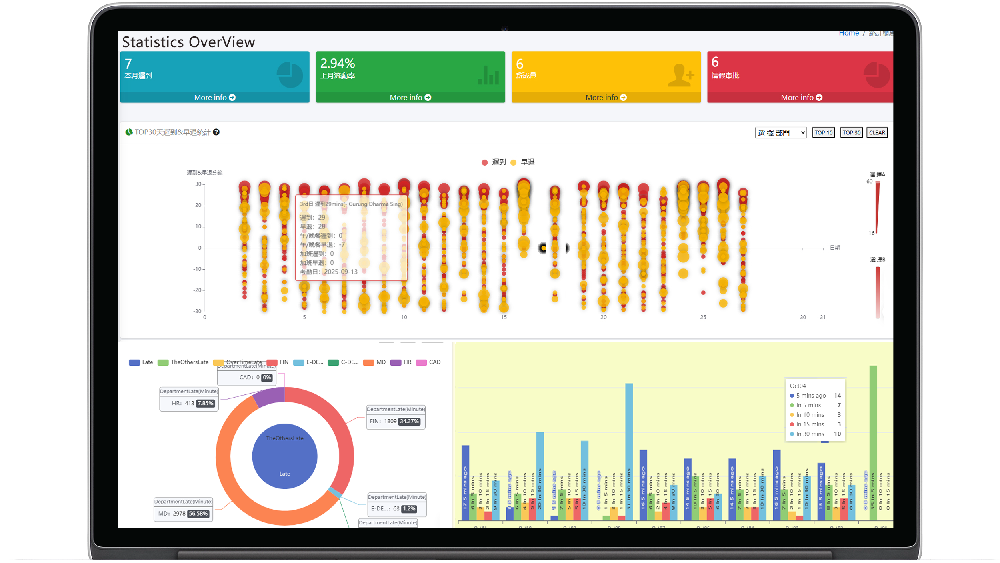
DGX-HRMS Attendance and Payroll System's Leave Type Setting Strategy
In today's rapidly changing business environment, companies are increasingly demanding greater flexibility and compliance in their human resource management. Especially in labor-intensive industries with complex departments and multiple branches (such as construction, chain restaurants, logistics, healthcare, and education), effectively managing employee leave and remaining leave is no longer just an administrative process issue, but a core element concerning operational efficiency and employee satisfaction. DGX HRMS (Human Resource Management System), an integrated attendance and payroll platform designed specifically for Hong Kong SMEs, offers a highly flexible, configurable, and compliant leave type setting strategy in its "Leave and Holiday Module." This allows companies to not only automate tedious administrative tasks but also achieve refined management of their human resource strategies.
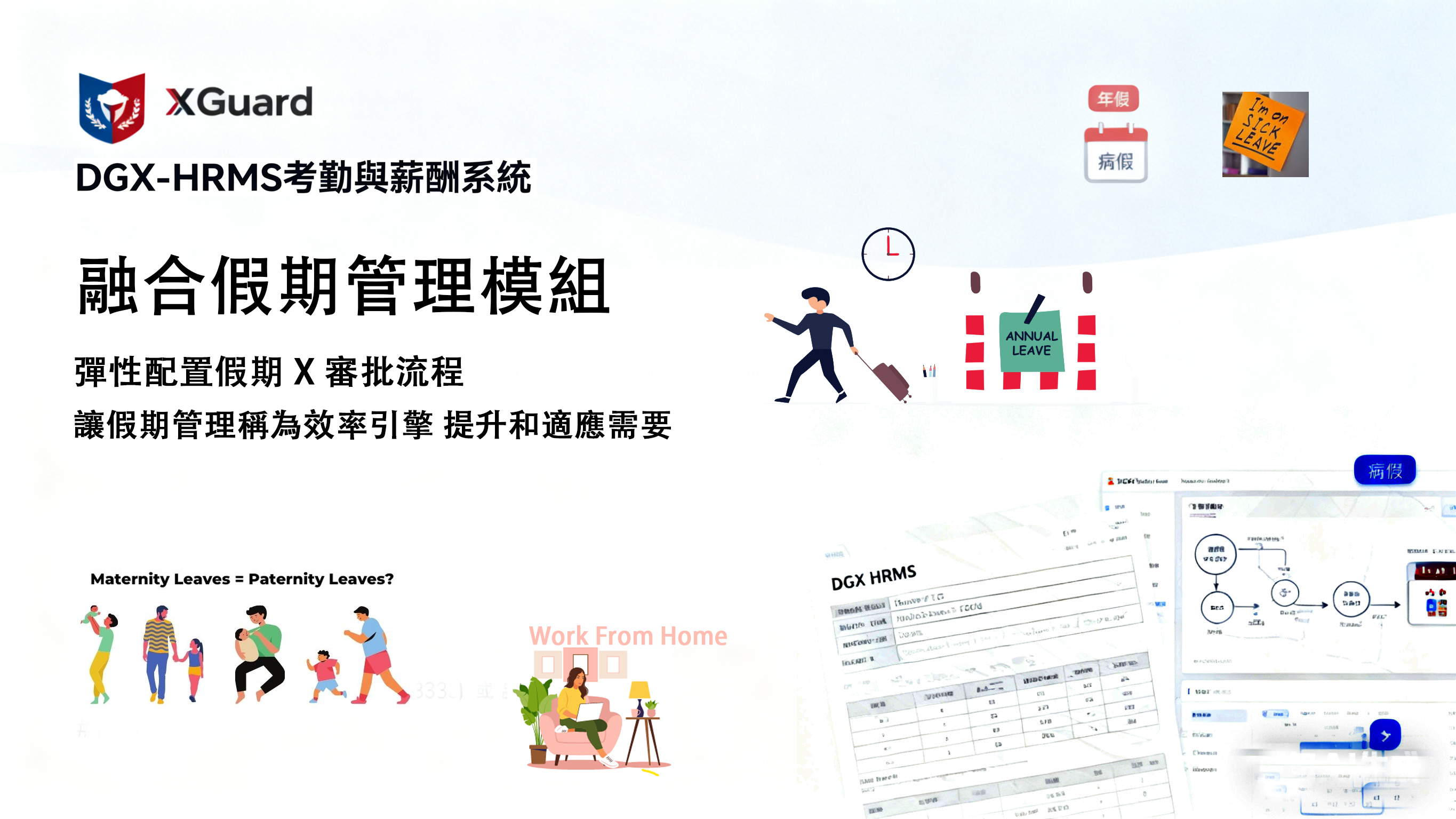
This article will provide an in-depth analysis of DGX HRMS's leave type setting strategy, explaining how it comprehensively improves enterprise administrative efficiency through features such as multi-dimensional leave type management, intelligent approval processes, automatic balance calculation, and cross-module integration.
I. Leave Type Settings: From "Standardization" to "Personalization" and "Industry Adaptation"
1.1 Pre-set Leave Types Meet Basic Needs
DGX HRMS pre-sets several common leave types, including:
- Statutory Public Holidays (according to the Hong Kong Employment Ordinance)
- Annual Leave: Automatically calculated based on years of service
- Sick Leave: Supports uploading medical certificates
- Maternity/Paternity Leave: Complies with the Maternity Leave Ordinance
- Marriage/Bereavement Leave: Leave for special family events
- Personal Leave: Can be set as paid or unpaid
These pre-set types cover most of the daily needs of enterprises, ensuring that new users can quickly enable the system without starting from scratch.
1.2 Custom Leave Types Support Business Specificity
More importantly, the system allows administrators to add, edit, and disable (block) specific leave types based on the characteristics of the enterprise or industry. For example:
- Construction industry can add "Weather-related work stoppage leave"
- Chain restaurants can set up "compensatory leave"
- Early childhood education institutions can define "summer vacation" or "training leave"
This feature transforms the system from a "general tool" into a true "enterprise-specific leave policy execution engine."
1.3 Leave Activation/Deactivation Mechanism Adapts to Enterprise Development Stages
Enterprises have different leave policy needs at different development stages. Early stages may only include annual leave and sick leave; expansion requires adding maternity leave, paternity leave, and special leave. DGX HRMS supports the "Leave Type Activation and Deactivation" function, allowing flexible adjustments without deleting data, ensuring system configuration is always synchronized with company policies and avoiding the need to rebuild processes due to policy changes.
Management Benefits: HR does not need to manually maintain multiple sets of leave rules; the system automatically identifies valid leave types, reducing human error and communication costs.
II. Intelligent Leave Approval Process: Clear Permissions and Traceable Processes
2.1 Multi-Level Approval Nodes Ensure Compliance and Oversight
DGX HRMS adopts a "multi-level approval node mechanism":
- Level 1: Direct Department Manager (Department Role)
- Level 2: HR or Senior Management (Customizable)
This design ensures that leave requests are not merely "employee discretionary applications," but require dual review by both business and HR departments to prevent abuse and ensure business continuity.
2.2 Automated Execution of Approval Rules
The system can automatically escalate approval levels based on leave duration:
- Leave ≤ 3 days → Department manager approval required
- Leave > 3 days → HR or General Manager approval required
In addition, the system mandates:
- Sick leave requires a doctor's certificate, otherwise it will be treated as personal leave
- Unapproved leave is considered absenteeism, automatically affecting attendance KPIs and payroll calculations
Management Benefits: Rules are built into the system, eliminating the need for manual intervention and significantly improving approval efficiency and fairness.
2.3 Approval Delegation and Status Tracking
If the approver is on leave or leaves the company, a "backup approver" can be pre-set to ensure uninterrupted workflow. All application statuses (pending, approved, rejected, withdrawn) are updated in real time, allowing employees to check progress at any time and reducing administrative interference from "chatting with HR".
III. Annual Leave Balance Management: Automatic Calculation, Annual Adjustment, and Historical Traceability
3.1 Automatic Calculation of Annual Leave Allowance
According to the Employment Ordinance, the number of annual leave days increases with years of service (1–5 years: 7–14 days). DGX HRMS automatically calculates the following based on the employee's "Date of Employment":
- Number of annual leave days entitled to the current year
- Number of days used
- Number of days remaining
No manual calculation required by HR, avoiding over- or under-payment.
3.2 Support for "Annual Leave Carry-forward" and "Expired Leave" Policies
Companies can choose:
- Annual leave can fully carry forward to the next year
- Partial carry-forward (e.g., a maximum of 5 days)
- Non-carry-forward, automatically reset to zero at the end of the year
The system automatically executes the settings to ensure policy consistency.
3.3 Real-time Balance Inquiry and Historical Records
Employees can log in to the system at any time to view their remaining leave and usage records. HR can export a "Department Leave Utilization Rate" report for manpower planning (e.g., avoiding concentrated leave requests before peak seasons).
Management Benefits: Transparent leave usage promotes employee self-management and reduces the daily query burden on HR.
IV. Deep Integration with Attendance, Payroll, and Scheduling Modules
4.1 Automatic Synchronization of Leave to Attendance Statistics
Once a leave application is approved, the system immediately marks the period as "Paid Leave" or "Unpaid Leave" and synchronizes it to the attendance module:
- Not counted as "Late/Early Departure/Absence"
- Correctly calculates the attendance rate
- Generates a leave report for management review
4.2 Precise Impact on Payroll Calculation
The payroll module automatically adjusts based on the nature of the leave:
- Paid Leave (e.g., annual leave, statutory holidays): Full salary paid
Unpaid Leave (e.g., excessive personal leave, sick leave): Daily deduction from salary
Maternity Leave: Paid at "five-quarters of salary" as required by law
The system supports "multiple settlement cycles" (daily, weekly, monthly) to ensure that even with temporary leave, salary is updated instantly.
4.3 Real-time Synchronized Scheduling System
The scheduling module automatically marks employee leave dates, allowing managers to:
- Arrange replacements in advance
- Avoid manpower shortages
- Optimize schedule efficiency
Management Benefits: Breaks down information silos between HR, attendance, payroll, and operations, achieving "one-time input, system-wide effect".
V. Hierarchical Access Control Design: Ensuring Data Security and Operational Compliance
DGX HRMS employs Role-Based Access Control (RBAC), clearly defining the permissions of each role:
| Role | Permission Scope |
|------|--------|
| Employee | Submit leave requests, check balance, view progress |
| Department Manager | Approve employee leave requests, view department statistics |
| HR/Administrator | Set leave rules, adjust balance, view company-wide data |
| System Administrator | Configure approval processes, set calculation logic, API integration |
This design ensures that "who can do what" is clearly traceable and complies with internal enterprise controls and GDPR/local privacy regulations.
VI. Special Circumstances Handling: Flexible Response to Real Workplace Needs
The system not only handles routine leave requests but also supports complex scenarios:
- Supplementary Leave Requests: Leave requests can be submitted retroactively in emergencies (within a time limit).
- Leave Cancellation: Leave requests can be cancelled before approval.
- Leave Extension: Leave can be extended upon approval.
- Leave Deduction: When annual leave is insufficient, it can be set whether to allow deduction from other leave (such as time off in lieu).
These features allow the system to strike a balance between "humanization" and "systematization," ensuring discipline without sacrificing flexibility.
VII. Practical Benefits of Improved Administrative Efficiency
Based on the above features, DGX HRMS's leave type setting strategy brings the following specific benefits to enterprises:
- Reduced Manual Processing Time by Over 70%: Say goodbye to Excel spreadsheets and paper applications; the entire process is digitalized.
- Reduced Compliance Risks: Automatically complies with Hong Kong's Employment Ordinance regarding annual leave, maternity leave, sick leave, etc.
- Enhanced Employee Experience: Self-service inquiries, instant approvals, and transparent progress tracking build trust.
- Strengthened Management Decision-Making: Leave usage data can be exported for HR planning and cost analysis.
- Support for Multi-Branch and Contractor Management: Unified leave policies can be implemented across chain stores, construction sites, and outsourced teams.
Conclusion: Leave management is not just about "giving employees time off," but a crucial step in enterprise digital transformation.
In DGX HRMS, leave type settings are not static "menu configurations," but a dynamic, intelligent, and scalable management strategy. It transforms enterprise HR policies into executable, traceable, and optimizable digital processes, allowing HR to shift from "administrative implementers" to "strategic partners."
For modern enterprises pursuing efficiency, compliance, and employee satisfaction, a system like DGX HRMS, which deeply integrates attendance, payroll, and leave management, is no longer an "optional" but a "must-have."
Further Recommendation: When implementing this system, companies should first review their existing holiday policies and then utilize DGX HRMS's "Custom Holiday Types" and "Approval Process Configuration" functions to accurately implement the policies and maximize the system's value.










Featured comments
No comments yet. Be the first.
Leave a comment
Bold and lists OK; no external scripts or images
0 / 2000
Comments appear after moderation