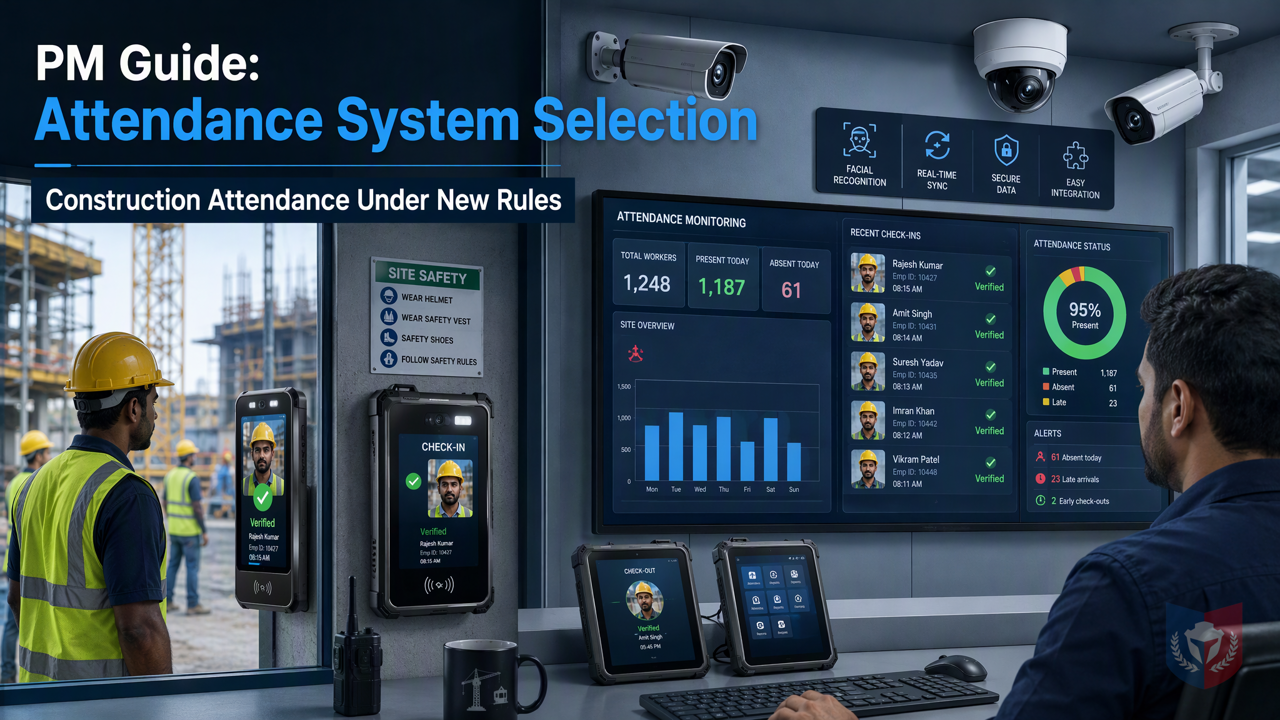
PM Must-Read: A Guide to Selecting Attendance Systems Under New Site Attendance Regulations
New regulations are changing the game. This guide for project managers breaks down essential features, pros and cons of different solutions, and real-world cases to help you avoid penalties and boost efficiency.
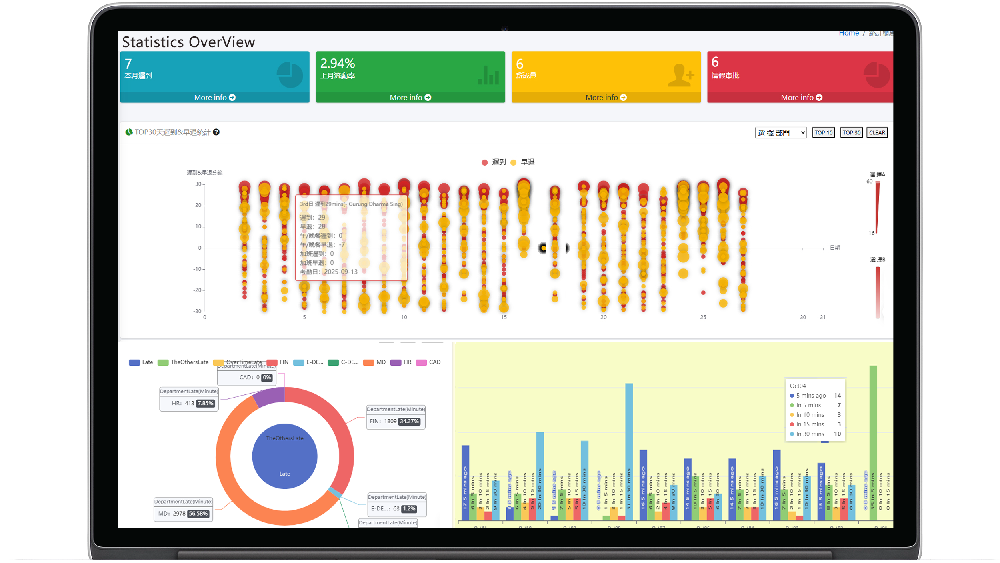
Time & Payroll Suite
Attendance, Payroll and Access Control Solution for Cost Reduction and Productivity Gains Details
All‑in‑one automated timekeeping and payroll system with robust, secure processes to guarantee payroll integrity. Includes leave management, shift rostering, multi‑site and chain support, multi‑ledger accounting, and comprehensive modules.
PM Must-Read: A Guide to Selecting Attendance Systems Under New Site Attendance Regulations
New Regulations Bring New Challenges to Site Attendance
In recent years, the construction industry has faced increasingly stringent requirements for site attendance. The new site attendance regulations demand not only recording workers' entry and exit times but also ensuring data accuracy, real-time capability, and traceability. For project managers (PMs), this means traditional paper sign-in or simple punch clocks are no longer sufficient for compliance. Errors in attendance data can lead to payroll disputes, or even penalties. Therefore, attendance system selection has become a critical task for PMs.
This article starts with the essential features under the new regulations, compares the pros and cons of different solutions, and shares customer cases from Dinghui Computer Systems to help you make an informed decision.
Essential Features of Attendance Systems Under New Regulations
1. Facial Recognition: Eliminate Buddy Punching
Site environments are complex with high worker turnover, making traditional punch clocks susceptible to buddy punching. Facial recognition technology effectively ensures that the person clocking in is the actual worker, and contactless operation is more hygienic and faster. When selecting, pay attention to the system's recognition accuracy under harsh conditions such as strong light or low light.
2. GPS Positioning: Confirm Work Location
Sites often have multiple work areas or even cross-district operations. GPS positioning records the geographic location when workers clock in, ensuring they are within the designated site area. This is particularly important for calculating allowances for remote sites or verifying absenteeism.
3. Cloud Data Synchronisation: Real-Time Attendance Visibility
The new regulations require timely reporting of attendance data. Cloud synchronisation allows PMs to view real-time attendance reports via mobile or computer from anywhere, enabling quick response to emergencies such as workers not arriving on time or last-minute redeployment.
4. Multi-Dimensional Reports and Integration Capabilities
Attendance data needs to interface with payroll, compliance audit, and other systems. The system should automatically generate reports that meet the new regulations and support export in common formats, reducing manual processing time and errors.
Comparison of Different Attendance Solutions
Solution 1: Traditional Punch Clock + Manual Processing
- Pros: Low initial cost.
- Cons: Cannot prevent buddy punching, data easily lost, manual processing is time-consuming and error-prone, and it is difficult to meet the real-time requirements of the new regulations.
Solution 2: Mobile App Clock-In + GPS
- Pros: Quick deployment, moderate cost, includes positioning.
- Cons: Some workers may be unfamiliar with smartphones, and GPS signals can be obstructed on sites, affecting accuracy.
Solution 3: Professional Facial Recognition System + Cloud Platform
- Pros: High accuracy, prevents buddy punching, real-time data synchronisation, supports various reports, and can integrate with other management systems.
- Cons: Higher initial investment and requires network support.
Solution 4: Biometrics (Fingerprint/Iris) + Positioning
- Pros: High security.
- Cons: Fingerprint wear or dirt may affect recognition; iris solutions are more expensive.
Overall, for PMs pursuing compliance and efficiency, Solution 3 is often a balanced choice.
Customer Case Studies from Dinghui Computer Systems
Case 1: A Large Infrastructure Project
The site covered a vast area with up to 500 workers. Previously, paper sign-in was used, and monthly payroll took three clerks a week to process, with frequent disputes. After implementing Dinghui Computer Systems' facial recognition attendance solution, workers simply scan their faces at the turnstile, and data is instantly uploaded to the cloud. PMs can view attendance rates anytime, and the system automatically generates compliance reports. Results: payroll processing time reduced to one day, manpower costs saved by about 60%, and no more buddy punching complaints.
Case 2: An Engineering Company with Cross-District Operations
The company managed multiple sites simultaneously, with workers moving between locations. It was difficult to accurately calculate each person's actual work location and hours. After adopting Dinghui Computer Systems' GPS-based attendance solution, the system automatically records the location and time of each clock-in and summarises by site. Management can clearly understand manpower distribution across sites and optimise deployment. The system also meets the new regulations' data retention requirements, avoiding potential penalty risks.
Key Points for Selection
- Compliance First: Ensure the system meets the new regulations' requirements for data accuracy, real-time capability, and retention period.
- Feature Match: Choose the appropriate identification method (facial, GPS, etc.) based on site scale, environment, and worker habits.
- Integration Capability: The system should interface with existing payroll, ERP, and other systems to avoid data silos.
- Cost-Effectiveness: Look beyond initial investment and calculate long-term savings in manpower and management costs.
- Vendor Strength: Choose a reputable partner that provides ongoing technical support, such as Dinghui Computer Systems.
Conclusion
The new site attendance regulations are both a challenge and an opportunity to enhance management. Rather than passively dealing with penalty risks, take the initiative to choose a suitable attendance system. We hope this attendance system selection guide provides clear direction for PMs. Remember, a good attendance system is not just a compliance tool but a driver for cost reduction and efficiency.
(This article is for reference only. For specific selection, please consult a professional vendor based on your actual situation.)
































Featured comments
No comments yet. Be the first.
Leave a comment
Bold and lists OK; no external scripts or images
0 / 2000
Comments appear after moderation