No AI Expert Needed! The AGMT Model Training Subsystem Makes It Easy for Ordinary Operators, with Alarm Accuracy Reaching 99.9%
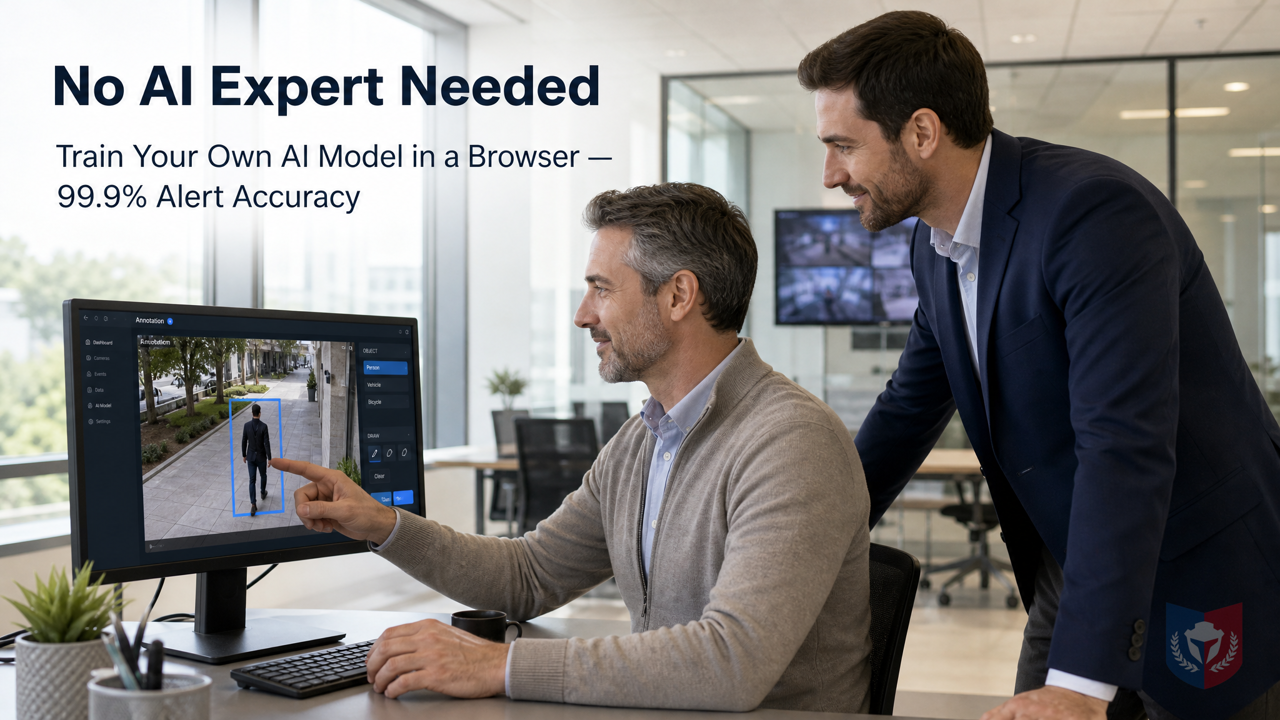
Traditional alarms are plagued by frequent false alarms, and the incident of the fire alarm bell being switched off at Wang Fuk Court sounded a warning. With the AGMT model training subsystem, AI-GUARD lets property management and security personnel train dedicated AI models simply by drawing boxes in a browser, with no coding required, achieving 99.9% accuracy and saying goodbye to false alarm troubles.
Time & Payroll Suite
Attendance, Payroll and Access Control Solution for Cost Reduction and Productivity Gains Details
All‑in‑one automated timekeeping and payroll system with robust, secure processes to guarantee payroll integrity. Includes leave management, shift rostering, multi‑site and chain support, multi‑ledger accounting, and comprehensive modules.
I. Topic Introduction | Why General AI Models Always Fall Short at the "Final Step"
1.1 The Customer's Pain: Pre-built Models Don't Recognize "My World"
1.1.1 Scenarios Vary Endlessly, Yet Templates Are All the Same
Whether it's a residential community, a commercial building, or a factory warehouse, every scenario has unique surveillance needs. However, the general models pre-built into most AI surveillance systems on the market are often trained on standardized samples and struggle to adapt to ever-changing real-world environments. The result: cameras recognize a "car" but can't tell "my car" from a "visitor's car," and recognize a "person" but can't distinguish a "resident" from a "salesperson."
1.1.2 Target-Specific Recognition Is the Essence of Surveillance
The core value of surveillance lies in identifying "specific targets" and "abnormal behavior." General models can only provide general results and cannot meet specialized needs. For example, property management needs to monitor "whether residents litter," and security personnel need to identify "suspicious individuals loitering"—these all require purpose-trained AI models.
1.1.3 You Have Your Own Data to Upload, But Don't Know Where to Start
Many customers realize they need to train specialized models and have collected large amounts of on-site images and video, but are at a loss when faced with a training platform: writing code, understanding algorithms, tuning parameters... these professional barriers deter ordinary operators. As a result, valuable data assets sit idle, and the surveillance system still "doesn't recognize" its own world.
1.2 Breaking Through: The AI GUARD Model Training Subsystem
1.2.1 One-Line Pitch: Let the Equipment Learn You, Instead of You Accommodating the Equipment
The AI GUARD Model Training Subsystem (AGMT) completely overturns the traditional model: you don't need to adapt to the equipment—instead, the equipment learns your scenarios and your rules. Through simple, intuitive operation, ordinary operators can train specialized AI models, enabling the surveillance system to truly "understand" your world.
1.2.2 Role Division of the Three Programs
AGMT consists of three programs, each with its own role, making the training process automated and simple:
1.2.2.1 AGMT Cloud — The Cloud Command Center
As a cloud management platform, AGMT Cloud is responsible for coordinating data, tasks, and model versions. Here you can upload images and video, manage datasets, launch training tasks, and monitor training progress. A multi-tenant isolation design ensures that different customers' data is secure and independent.
1.2.2.2 AGMT Edge — The On-Site Computing Engine
Training requires computing power, but privacy cannot leave the premises. AGMT Edge is deployed on GPU nodes within the local area network, performing model training directly on-site, so data does not need to be uploaded to the cloud—balancing efficiency and privacy.
1.2.2.3 AiGuardCloudApp — The One-Click Deployment Station
Trained models can be deployed to front-end devices with one click through AiGuardCloudApp. With no complex configuration required, the surveillance system immediately gains new recognition capabilities.
II. Feature Overview | From a Single Image to a Custom Model
2.1 Data Collection: Assets Are the Capital for Training
2.1.1 Image and Video Upload, Multi-Tenant Isolation
Through AGMT Cloud, you can easily upload on-site images or video. The system uses a multi-tenant isolation mechanism to ensure that each customer's data is stored independently without interference.
2.1.2 Automatic Frame Extraction from Video, Samples in a Second
Uploaded video is automatically frame-extracted to quickly generate large numbers of training samples. No manual screenshots needed—the system helps you efficiently use every segment of video.
2.1.3 One Image, Multiple Uses: The Same Asset Can Belong to Multiple Datasets
The same image can be used for multiple training tasks at once—for example, both for "person detection" and for "vehicle recognition." Asset reuse increases data value.
2.2 Annotation: Drawing a Box Is Teaching
2.2.1 Browser-Based Box Drawing, Zero Installation, Zero Code
The annotation process is extremely simple: open the image in a browser, use the mouse to draw a box around the target object, and enter a label. No software installation and no coding required. Anyone comfortable with a computer can do it easily.
2.2.2 Each Box Saved Independently, Separate Annotations for Different Tasks
The annotation results for each box are saved independently, and different training tasks can each maintain their own set of annotation data without affecting one another, allowing flexible management.
2.2.3 Snapshot Mechanism: Freeze Samples, Reproducible Training
Before training, the system creates a snapshot of the current annotation data, freezing the sample state. Even if annotations are modified later, the training results remain reproducible, ensuring experimental reliability.
2.3 Training: Computing Power Stays On-Site, Privacy Never Leaves
2.3.1 LAN GPU Nodes, Taking the Initiative
AGMT Edge uses GPU nodes within the local area network for training, so data does not need to leave the premises—safeguarding privacy while reducing transmission latency.
2.3.2 Three Codename Lines, Choose Speed or Precision
The system offers three training modes (AG5 series, etc.), allowing you to balance speed and precision according to your needs. Users can flexibly choose based on the scenario without needing to understand the underlying algorithms.
III. The Usability Revolution: Ordinary Operators Can Also Train AI
AGMT's design philosophy is "de-professionalization." No AI expertise and no programming experience are required—as long as you can use a browser, you can complete the entire process from data upload and annotation to training. This means property management staff, security personnel, and security system integrators can all train models independently, greatly saving time and labor costs.
IV. 99.9% Accuracy: Say Goodbye to Traditional False Alarms
Traditional analog or digital electronic alarm systems commonly suffer from false alarms. For example, the incident at Wang Fuk Court where the fire alarm was turned off was caused by frequent false alarms leading to manual shutdown, planting hidden safety risks. AI-GUARD uses an AI alarm training system to conduct targeted model training through AGMT, raising alarm accuracy to 99.9% and fundamentally reducing false alarms.
Compared with traditional alarms, AI-GUARD's advantages are:
- Target-Specific Recognition: The model is trained for your scenario and only triggers alarms for genuine anomalies.
- Continuous Optimization: As data accumulates, the model can be continuously iterated, with accuracy steadily improving.
- Easy to Manage: Ordinary operators can complete training and maintenance without relying on external experts.
V. Conclusion: Let AI Alarms Truly Protect Your Safety
The AI GUARD Model Training Subsystem (AGMT) breaks down the technical barriers to AI training, enabling ordinary operators to easily build specialized AI alarm models with 99.9% accuracy. Whether you are in property management, security personnel, or a security system integrator, you can use browser-based box annotation to quickly train a model that recognizes "your world," saying goodbye to false alarm troubles and making safety protection truly effective.





























Featured Reviews
No reviews yet. Be the first to leave one.
Write a review
Supports bold and lists; do not paste external scripts or images
0 / 2000
Visible after review