Tired of Constant False Alarms from Your AI? Dinghui AGMT Model Training Lets Devices Learn Your World
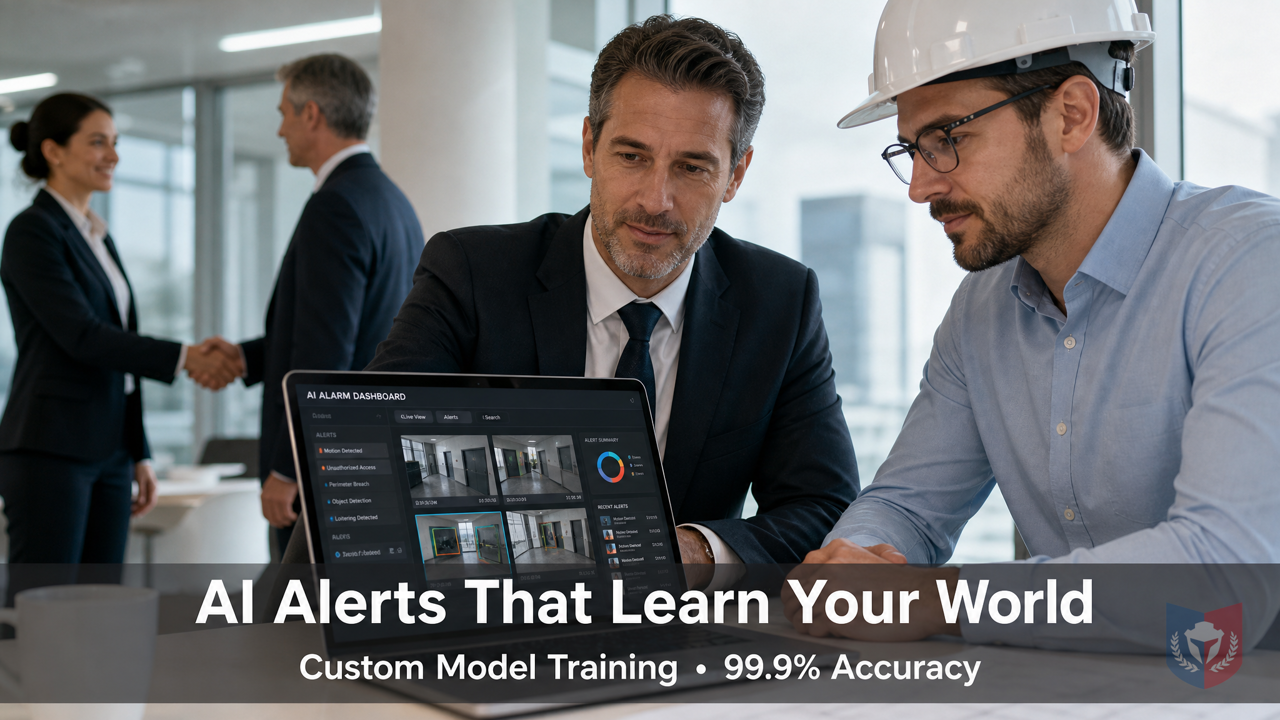
The incident of fire alarm bells being disabled at Wang Fuk Court highlights the pain of false alarms from traditional systems. AI-GUARD uses customized model training to raise accuracy to 99.9%, requires no specialists, and is easy enough for ordinary computer users to get started, making security monitoring truly fit your specific scenarios.
Time & Payroll Suite
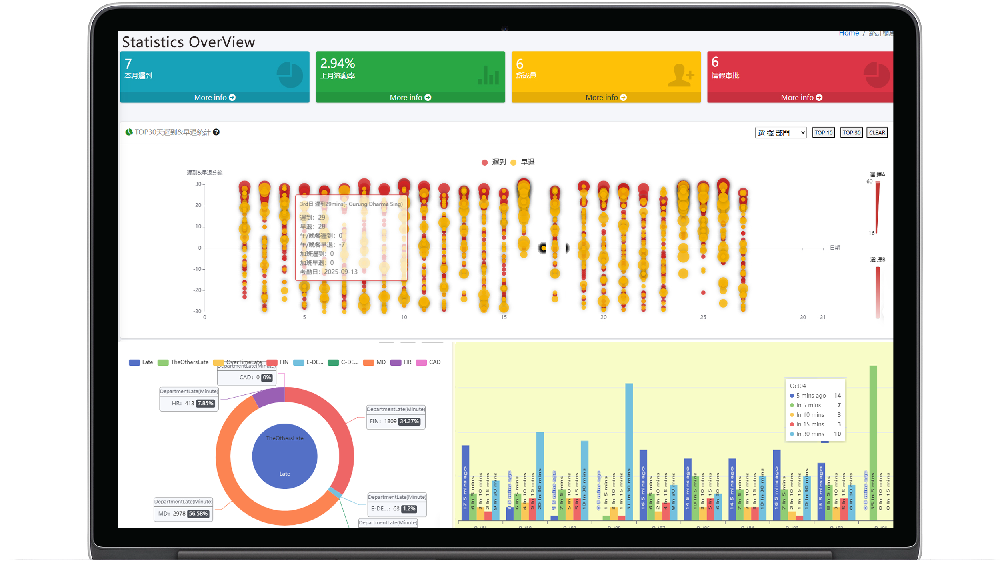
Attendance, Payroll and Access Control Solution for Cost Reduction and Productivity Gains Details
All‑in‑one automated timekeeping and payroll system with robust, secure processes to guarantee payroll integrity. Includes leave management, shift rostering, multi‑site and chain support, multi‑ledger accounting, and comprehensive modules.
I. Breaking the Topic | Why General AI Models Always Fall Short at the "Final Step"
The recent incident of the fire alarm bell being turned off at Wang Fuk Court once again exposed the fatal weakness of traditional analog or digital electronic alarm systems: frequent false alarms force users to disable the alarms, planting hidden safety risks. Many security engineering firms, property management companies, and corporate security managers share a similar frustration—why do advanced AI alarm systems still trigger false alarms so often? The core of the problem is that general AI models always fall short at the "final step."
1.1 The Customer's Pain: Prebuilt Models Don't Recognize "My World"
1.1.1 Scenarios Vary Widely, but Templates Are All the Same
Every surveillance scenario is unique: lighting changes, object placement, and people flow patterns all differ. However, most AI alarm systems on the market use prebuilt general models. These models perform excellently in laboratory environments, but once they enter real scenarios, they frequently trigger false alarms because they cannot adapt to local characteristics. It is like using the same key to open all locks—naturally hitting obstacles everywhere.
1.1.2 Specialized Target Recognition Is the Essence of Surveillance
The essence of security surveillance is not recognizing generalized targets such as "people" and "vehicles," but recognizing "the specific people, vehicles, and objects in your scenario." For example, factories need to distinguish employees from outsiders, shopping malls need to identify suspicious behavior, and residential communities need to filter out alarms triggered by pets. Only specialized recognition can achieve precise surveillance.
1.1.3 You Upload Your Own Data, but Don't Know Where to Start
Many users realize they need to train models with their own data, but when faced with processes such as data collection, annotation, and training, they often hesitate due to a lack of professional knowledge. Even if they upload images or video, they do not know how to use them effectively, and ultimately they can only give up on customization and continue to endure false alarms from general models.
1.2 Breaking the Topic: AI GUARD Model Training Subsystem
1.2.1 One-Sentence Selling Point: Let the Device Learn You, Not You Accommodate the Device
The AGMT (AI-Guard Model Training) model training subsystem equipped in the AI-GUARD security alarm system completely reverses traditional thinking: instead of requiring users to adapt to the device's prebuilt rules, it lets the device actively learn the user's dedicated scenario. Through simple operations, ordinary people can also train highly accurate AI alarm models, reducing the false alarm rate to an extremely low level and achieving accuracy of 99.9%.
1.2.2 Role Division of the Three Programs
The AGMT subsystem operates through the collaboration of three core programs, each performing its own role, making model training easy and efficient:
1.2.2.1 AGMT Cloud — Cloud Command Center
As a cloud management platform, AGMT Cloud is responsible for coordinating data, annotation tasks, and training projects. Users can manage the training process anytime and anywhere through a browser, without installing complex software. The multi-tenant isolation design ensures that each customer's data is independently secure and does not interfere with others.
1.2.2.2 AGMT Edge — On-Site Computing Power Engine
Training computation takes place on GPU nodes within the local area network, and data does not need to be uploaded to the cloud, fully protecting privacy. This edge computing model not only improves processing speed but also gives users in sensitive scenarios peace of mind.
1.2.2.3 AiGuardCloudApp — One-Click Deployment Transceiver Station
This application is the bridge connecting the cloud and the site, providing an intuitive operation interface that allows users to complete model deployment and updates with one click. Even those without a programming background can easily get started.
II. Feature Overview | From One Image to a Custom Model
2.1 Data Collection: Assets Are the Capital for Training
2.1.1 Image and Video Upload, Multi-Tenant Isolation
Users can upload images or video through AGMT Cloud as training material. The system uses a multi-tenant isolation mechanism to ensure secure storage of different users' data and prevent cross-access.
2.1.2 Automatic Video Frame Extraction, Samples in a Second
Uploaded video is automatically frame-extracted to quickly generate a large number of training samples, eliminating the tedious step of manual screenshots. Even long surveillance recordings can be converted into usable datasets in a short time.
2.1.3 One Image, Multiple Uses: The Same Asset Can Enter Multiple Datasets
The same image or video can be assigned to multiple datasets at the same time for training different recognition tasks. For example, data from the same scenario can be used for both person detection and vehicle recognition, fully realizing the value of the data.
2.2 Annotation: Drawing Boxes Is Teaching
2.2.1 Browser-Based Box Drawing, Zero Installation, Zero Code
The annotation process is performed entirely in the browser. Users only need to use the mouse to draw a box around the target object to complete annotation. No software installation or code writing is required, greatly lowering the technical threshold.
2.2.2 Each Box Saved Independently, Separate Annotation Sets for Different Tasks
Each annotation box is saved independently, and different training tasks can have their own annotation sets. This allows users to flexibly handle multiple recognition needs without affecting one another.
2.2.3 Snapshot Mechanism: Freeze Samples, Reproducible Training
The system provides a snapshot function that can freeze the current dataset state, ensuring that the samples used in each training run are consistent and the results are reproducible. This is crucial for model tuning and version management.
2.3 Training: Computing Power Stays On-Site, Privacy Never Leaves
2.3.1 LAN GPU Nodes, Taking the Initiative
Training tasks are executed by GPU nodes within the local area network, and data does not need to leave the local network, ensuring privacy and security. At the same time, edge computing reduces dependence on cloud resources and enables faster response.
2.3.2 Three Code Lines, Choose Speed or Accuracy
AGMT provides three training modes to meet the needs of different scenarios for speed and accuracy:
2.3.2.1 AG5 Series: Classic and Robust
The AG5 series is a classic algorithm verified by the market, balancing speed and accuracy, and is suitable for most conventional scenarios. For users trying model training for the first time, AG5 is a robust starting point.
(Note: The other two code lines are not expanded here because their specific names and descriptions were not provided in the outline.)
Conclusion: Precise Alarms Start with Customization
The false alarm problem of traditional alarm systems has existed for a long time, and the Wang Fuk Court incident is only the tip of the iceberg. The AGMT model training subsystem of AI-GUARD allows ordinary users to easily train dedicated AI models, raising alarm accuracy to 99.9% and fundamentally reducing false alarms. Whether you are a security engineering firm, property management company, or corporate security manager, this solution can help surveillance devices truly understand "your world" and achieve secure, reliable intelligent security.






























Featured Reviews
No reviews yet. Be the first to leave one.
Write a review
Supports bold and lists; do not paste external scripts or images
0 / 2000
Visible after review