Rising Wage-Hour Disputes in Retail: How Smart Surveillance Systems Become a Compliance Ally
Facing disputes over time records between employers and employees, how can retail stores leverage smart surveillance systems to objectively document working hours and reduce legal risks and management costs? This article explores causes, selection tips, and application scenarios.
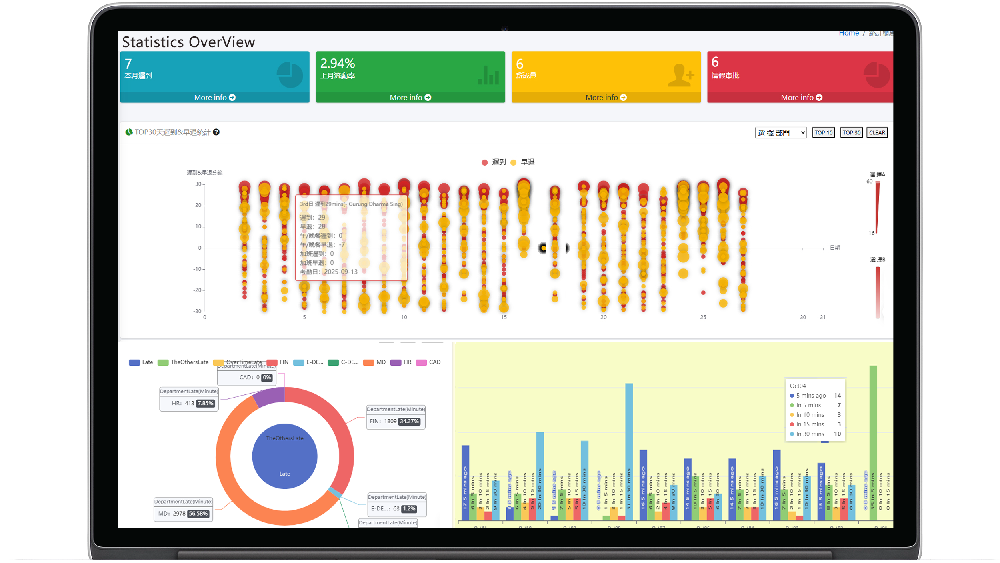
Time & Payroll Suite
Attendance, Payroll and Access Control Solution for Cost Reduction and Productivity Gains Details
All‑in‑one automated timekeeping and payroll system with robust, secure processes to guarantee payroll integrity. Includes leave management, shift rostering, multi‑site and chain support, multi‑ledger accounting, and comprehensive modules.
Rising Wage-Hour Disputes in Retail: How Smart Surveillance Helps Objectively Document Working Hours
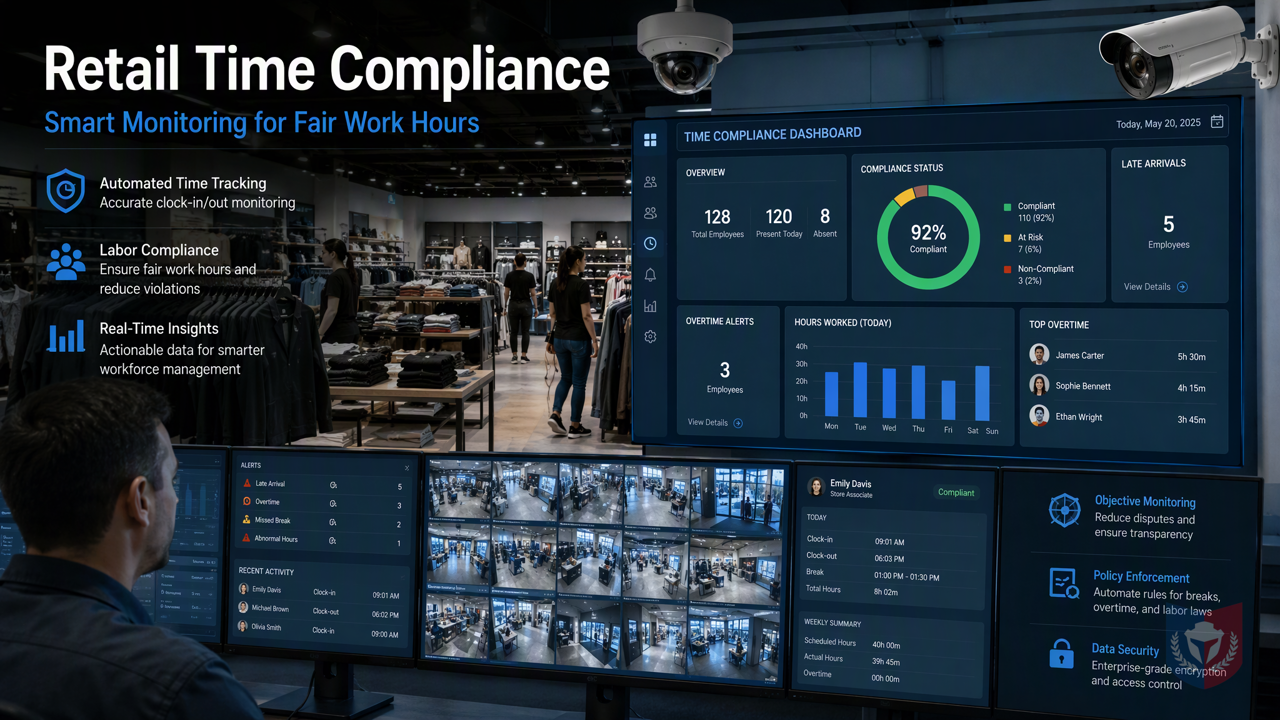
In recent years, wage-hour disputes in the retail industry have been on the rise, with employers and employees often at odds over the accuracy of time records. This has become a headache for many store managers and HR professionals. This article explores how smart surveillance systems can assist in time management, reduce disputes, and provides selection tips and practical application scenarios to help you lower management costs and legal risks.
Common Causes of Wage-Hour Disputes
Retail scheduling is flexible and manpower deployment is frequent. Time records often rely on manual clock-ins or paper sign-ins, which are prone to errors. Common disputes include:
- Manual recording errors: Employees may forget to clock in, proxy clock-ins, or managers may make calculation mistakes.
- Overtime disputes: Different perceptions of when overtime starts and ends, such as whether staying after hours to handle store tasks counts as overtime.
- Rest break disputes: Under shift systems, whether rest breaks are counted as working hours often leads to conflicts.
These disputes not only consume management time but may also lead to labor-management confrontation and even legal action.
How Smart Surveillance Systems Provide Objective Evidence
Smart surveillance systems are not just for theft prevention; they can also be a tool for time management. Through in-store cameras and intelligent analysis, the system can provide objective entry/exit records and an in-store activity timeline as supporting evidence. For example:
- Entry/exit records: Accurately record employee clock-in and clock-out times, reducing proxy clock-ins.
- Activity timeline: Combine footage with time stamps to reconstruct in-store activities and help determine overtime facts.
- Remote access: Managers can view live and historical footage anytime via mobile or computer, facilitating time verification.
These features not only improve management efficiency but also provide strong evidence in disputes, reducing legal risks.
Practical Tips for Choosing a Smart Surveillance System
When selecting a smart surveillance system for retail stores, consider the following:
- Video storage days: Choose sufficient storage days based on store needs to ensure historical records are traceable.
- Search convenience: The system should support quick searches, such as by date, time, or event, to save retrieval time.
- Remote access: Support multi-device remote access, allowing managers to monitor the store anytime.
- Scalability: As the store grows, the system should easily expand camera count and storage capacity.
- User-friendly interface: Intuitive operation to reduce employee learning costs.
Practical Application Scenarios
Shift Verification
Store managers can quickly verify actual attendance against schedules using entry/exit records, identifying anomalies promptly.
Incident Reconstruction
When labor disputes arise, managers can retrieve footage and timelines from specific dates to reconstruct events, serving as strong evidence for mediation or legal proceedings.
Compliance Management
The objective data provided by the system helps businesses comply with labor regulations and avoid penalties for inaccurate time records.
Conclusion
Wage-hour disputes in retail not only affect labor relations but may also bring legal risks and management costs. Smart surveillance systems, through objective recording and convenient retrieval, become a compliance ally. When purchasing, consider storage days, search convenience, and remote functions to meet your store's actual needs. Evaluate your time management process today and introduce a smart surveillance system to create a more transparent and efficient work environment for your store.























Featured comments
No comments yet. Be the first.
Leave a comment
Bold and lists OK; no external scripts or images
0 / 2000
Comments appear after moderation