How Can Retail Store Attendance Data Help You Save on Labor Costs? Real-World Case Analysis
Facing rising wages and weak consumer spending, how can chain store owners and finance managers use attendance data to optimize scheduling and reduce overtime expenses? This article shares public case studies and key points for selecting an attendance system from a business ROI perspective.
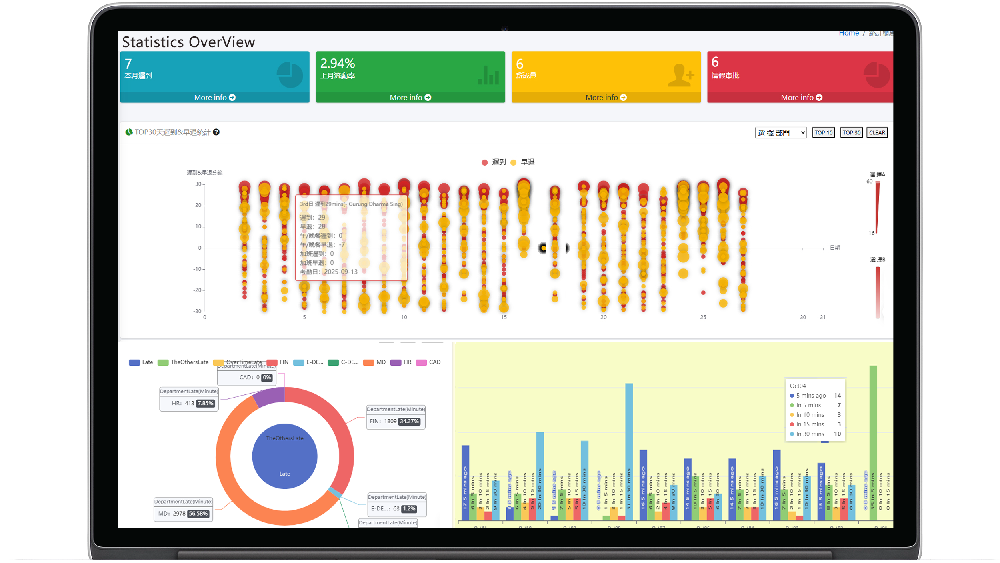
Time & Payroll Suite
Attendance, Payroll and Access Control Solution for Cost Reduction and Productivity Gains Details
All‑in‑one automated timekeeping and payroll system with robust, secure processes to guarantee payroll integrity. Includes leave management, shift rostering, multi‑site and chain support, multi‑ledger accounting, and comprehensive modules.
The Value of Attendance Data Under Cost Pressure in Retail
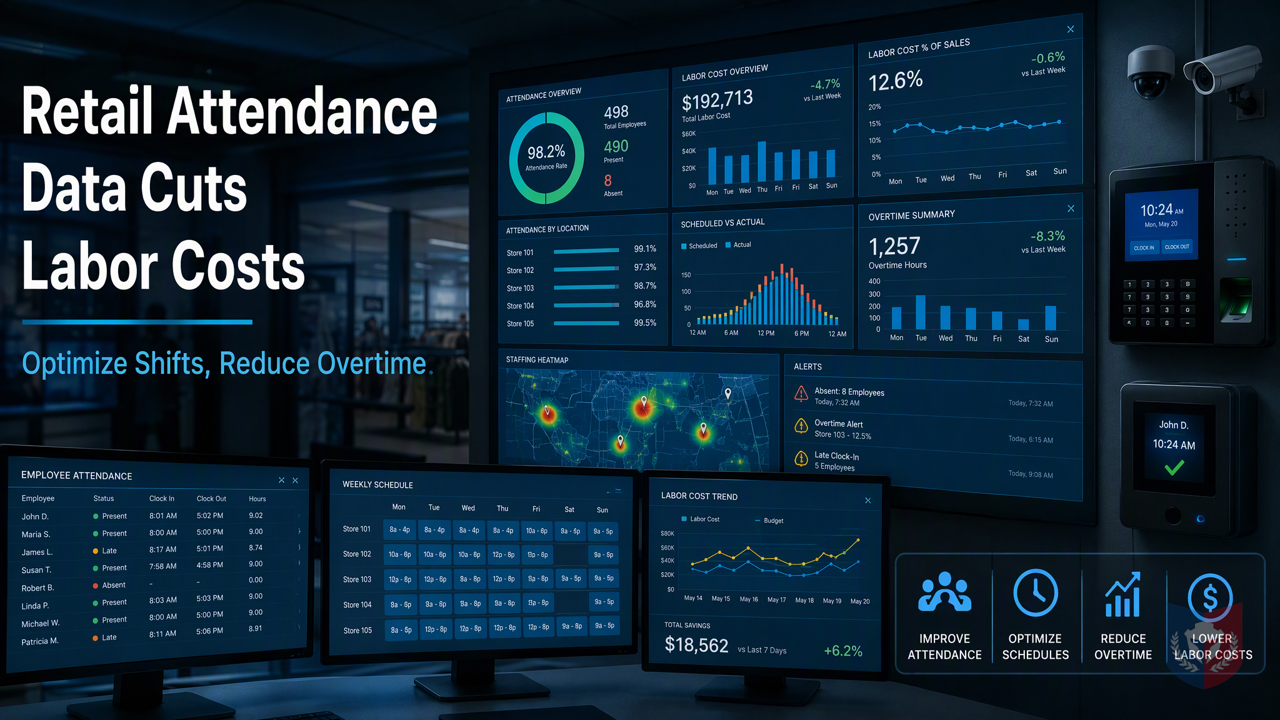
In recent years, Hong Kong's retail industry has been grappling with rising wages, shifting consumer patterns, and soaring operating costs. Chain store owners and finance managers are constantly seeking ways to control expenses. Among these, labor costs often account for the largest share of a retail store's operating expenses, and scheduling efficiency and overtime spending directly impact profitability.
However, many businesses still rely on manual paper records or simple punch clocks to manage frontline staff attendance, resulting in fragmented, delayed data that hardly supports refined workforce decisions. In fact, by making good use of attendance data, you can uncover significant optimization opportunities and truly achieve "every penny saved counts."
How Can Attendance Data Help You Gain Insight into Store Labor Efficiency?
Traditional attendance is only for payroll, but a modern attendance system can transform raw punch records into valuable business intelligence. For example:
- Per-store productivity: Compare total work hours and revenue across different branches to identify which stores are overstaffed and which are chronically understaffed.
- Overtime trend analysis: Which shifts and stores frequently incur overtime? Is it due to poor scheduling or sudden customer surges?
- Late arrival, early departure, and absence patterns: Identify attendance anomalies among individuals or teams and intervene early.
- Scheduling and footfall matching: Combine attendance data with POS sales data to see if staffing is truly sufficient during peak hours.
These analyses require no complex technology, yet they provide management with objective evidence to avoid "gut feeling" decisions.
Real-World Case: How a Retail Chain Reduced Overtime Expenses
Below is a public industry case (data organized and anonymized):
Background: A retail clothing brand with about 20 stores in Hong Kong and over 200 frontline employees. Store managers created rosters independently, and headquarters only received paper rosters afterwards. Overtime was common, but no one knew the reasons.
Pain points:
- Monthly overtime pay accounted for about 12% of total labor costs, but management was unclear where the problem lay.
- Some stores were chronically understaffed, forcing employees to work overtime, leading to high turnover.
- The finance department spent a lot of time reconciling rosters and punch records each month, prone to errors.
After implementing an attendance system:
- Centralized data: All store punch records were uploaded to the cloud in real time, accessible by headquarters anytime.
- Exception alerts: The system automatically flagged consecutive overtime and excessive work hours, notifying supervisors for follow-up.
- Rich report dimensions: Analysis by store, position, and time period revealed that three stores had excess evening staff, while two stores were clearly short-handed on weekend afternoons.
- Integration with payroll system: Attendance data was directly imported into the payroll system, reducing manual input errors and saving about two working days of administrative time per month.
Results (actual figures vary by company):
- After three months of scheduling optimization, overall overtime hours decreased by about 18%, equivalent to monthly savings of approximately HKD 15,000 in overtime expenses.
- Employee complaints decreased, and turnover slightly declined.
- The finance department's payroll processing efficiency improved, with lower error rates.
This case demonstrates that attendance data is not just for payroll but a powerful tool for optimizing labor costs.
Key Questions to Ask When Choosing an Attendance Solution
With a myriad of attendance systems on the market, how should retail chains choose? Here are essential questions to ask before procurement:
1. How rich are the report dimensions?
- Can it output reports by store, department, position, time period, and employee?
- Are there pre-set labor efficiency reports (e.g., revenue per capita, overtime ratio)?
- Can reports be customized?
2. How strong are the exception alert functions?
- Does it automatically detect late arrivals, early departures, absences, and consecutive overtime?
- Are alerts sent in real time or as daily summaries?
- Can alert thresholds be set for different roles?
3. Is integration with payroll systems easy?
- Which common payroll systems are supported? Are there standard interfaces?
- Is the data export format compliant with accounting requirements?
- Can it handle complex allowance and deduction rules?
4. Is it user-friendly for frontline staff?
- Are there multiple punch methods (mobile, card, facial recognition)?
- Does it support offline punching and automatic upload after network recovery?
- Is it convenient for employees to check rosters and punch records?
5. System scalability and cost?
- Can it scale with the number of stores?
- Is pricing per month or per user? Are there hidden fees?
- What level of technical support and training is provided?
Conclusion: From Data to Decisions, Enhancing Retail Competitiveness
To stand out in fierce competition, retail chains must pursue refined management. Attendance data acts as a mirror, reflecting the reality of workforce utilization. Through a suitable attendance system, owners and finance managers can more accurately assess labor efficiency across stores, optimize retail scheduling, reduce unnecessary overtime expenses, and directly improve profitability.
Remember, when choosing an attendance solution, don't just look at price; consider whether it provides the report dimensions, exception alerts, and system integration capabilities you need. Only by turning data into action can you truly achieve the goal of reducing labor costs.
(This article is for reference only. Actual results vary by company and do not constitute any investment or return guarantee.)
































Featured comments
No comments yet. Be the first.
Leave a comment
Bold and lists OK; no external scripts or images
0 / 2000
Comments appear after moderation