How to Choose a Retail Chain Store Attendance System? 2025 Compliance and Efficiency Selection Guide
Facing updated labour regulations and rising labour costs, how can Hong Kong retail chain management and IT procurement choose the right attendance system? This guide offers practical advice on compliance, scheduling efficiency, and multi-store management.
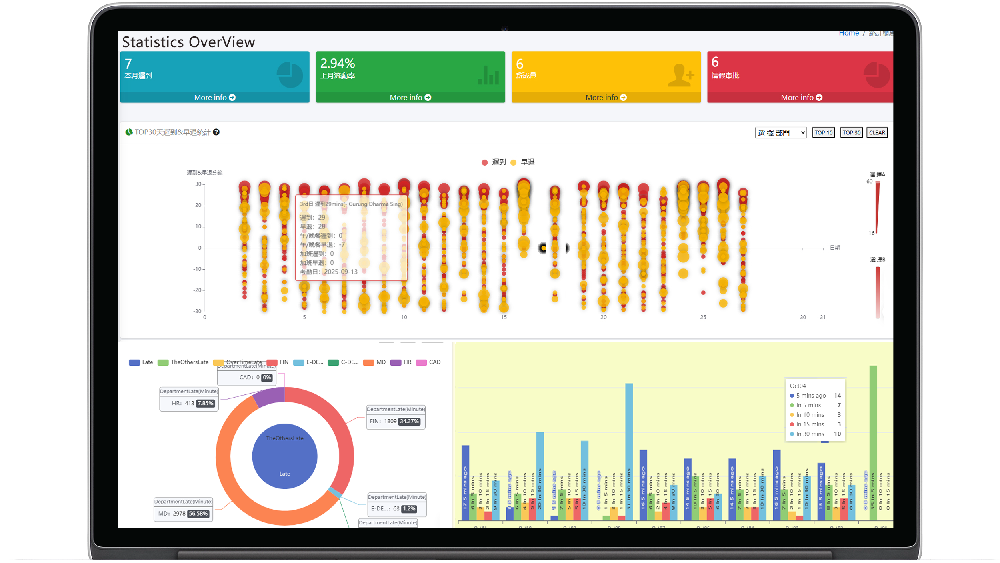
Time & Payroll Suite
Attendance, Payroll and Access Control Solution for Cost Reduction and Productivity Gains Details
All‑in‑one automated timekeeping and payroll system with robust, secure processes to guarantee payroll integrity. Includes leave management, shift rostering, multi‑site and chain support, multi‑ledger accounting, and comprehensive modules.
New Challenges in Retail Chain Attendance: Balancing Compliance and Efficiency
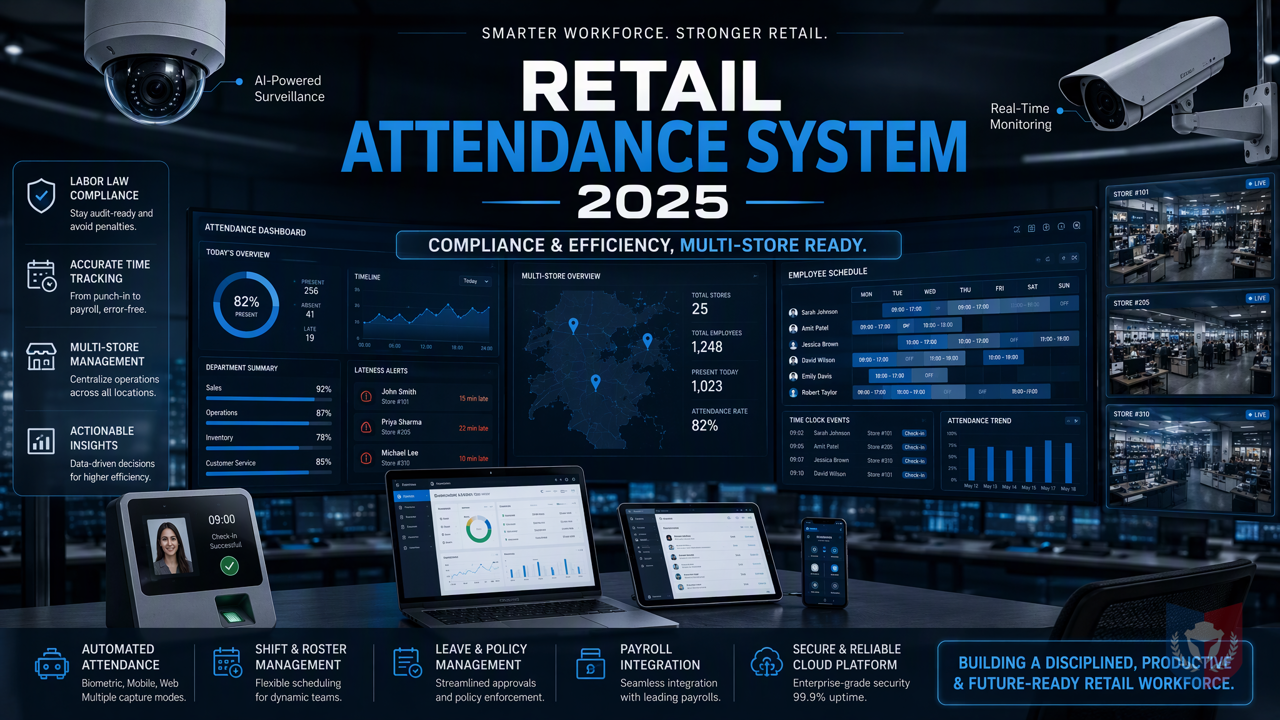
In recent years, Hong Kong's labour regulations have been continuously updated. Coupled with high staff turnover and a rising proportion of part-time workers in the retail industry, chain store management faces increasing pressure in attendance management. Traditional methods such as paper sign-in or standalone time clocks for store attendance are not only prone to human error but also struggle to handle daily scenarios like cross-store deployment and sudden leave requests. A suitable retail attendance system has become a key tool for enhancing compliance and operational efficiency.
Common Pain Points of Multi-Store Attendance in Retail
Frequent Cross-Store Deployment and Complex Working Hour Calculation
Retail chains often arrange staff to support different stores during promotions, seasonal peaks, or employee leave. Without a unified system, attendance records from different stores are scattered, and HR needs to manually consolidate working hours, easily leading to missed overtime or rest days and increasing the risk of labour disputes.
High Proportion of Part-Time Staff and Variable Scheduling
Retail has a significant proportion of part-time employees whose working hours are fragmented and frequently adjusted. Traditional scheduling methods struggle to quickly respond to sudden leave or last-minute shift changes, resulting in poor manpower allocation and affecting customer service quality.
Chaotic Sudden Leave and Shift Cover Arrangements
When employees take sudden leave, store managers often have to contact replacement staff one by one via phone or messaging apps, which is time-consuming and lacks records. It is also difficult to trace leave approvals and shift cover hours afterwards, creating management loopholes.
Key Functional Considerations When Choosing a Store Attendance System
Mobile Clock-In and Geofencing
Systems that support mobile clock-in via smartphones allow employees to verify their location using GPS or geofencing technology, ensuring accurate working hour records regardless of which branch they are at. Management can set specific clock-in ranges for each store to prevent fraudulent clock-ins.
Integration with POS or HR Systems
If the attendance system can integrate with POS or HR management systems, it can automatically compare sales peak hours with manpower allocation, helping management analyse manpower efficiency. Attendance data can also be directly imported into payroll calculations, reducing duplicate data entry.
Scheduling and Roster Management
The system should provide an intuitive scheduling interface that supports copying rosters, batch modifications, and conflict alerts. Store managers can quickly adjust rosters in response to sudden leave and notify affected employees instantly.
Compliance and Audit Trail
The system must comply with Hong Kong's Employment Ordinance and related labour regulations, automatically calculating entitlements such as rest days, statutory holidays, and annual leave. A complete audit trail function records all attendance changes for future verification.
Optimising Labour Costs Through Data Reports
Working Hour Analysis and Anomaly Alerts
The system should provide multi-dimensional reports, such as daily attendance rates, overtime hours, and late/early departure statistics. Management can set anomaly alerts, for example, when consecutive overtime exceeds a specified number of hours, to intervene and adjust in a timely manner.
Correlation Analysis Between Labour Costs and Sales
By combining attendance data with POS sales data, indicators such as labour productivity per capita and sales per hour for each store can be calculated, helping management determine optimal staffing levels and avoid over-scheduling or understaffing.
Predictive Scheduling Suggestions
Some systems can provide predictive scheduling suggestions based on historical sales data and foot traffic patterns, allowing management to plan manpower in advance and balance service levels with cost control.
Retail Chain Store Attendance System Selection Guide
Clarify Needs and Budget
First clarify the number of stores, staff size, existing system integration needs, and compliance requirements, then set a budget. Do not focus only on price and ignore subsequent maintenance and expansion costs.
Evaluate System Scalability
Choose a system that can flexibly add stores and users as the business grows, avoiding the hassle of changing systems later. Cloud solutions are usually more scalable.
Vendor Support and Services
Understand whether the vendor provides local technical support, training, and system update services. The fast pace of Hong Kong's retail industry makes timely support crucial.
Trial and Reference Cases
Request a trial or demo from the vendor and refer to successful cases in the same industry. Actual hands-on experience reflects suitability better than a feature list.
Conclusion
Retail chain store attendance management is no longer just about clock-in records; it is a core aspect related to compliance risks, operational efficiency, and labour costs. Choosing a suitable retail attendance system can not only reduce the workload of HR and store managers but also drive decisions with data to enhance overall competitiveness. In 2025, review your store attendance solution immediately to lay a solid foundation for business growth.
































Featured comments
No comments yet. Be the first.
Leave a comment
Bold and lists OK; no external scripts or images
0 / 2000
Comments appear after moderation