Custom Alert Training: Tailoring CCTV Systems to Your Business Scenarios
Edge AI training with custom alerts helps enterprises reduce false alarms, speed up response, and achieve personalised security ROI
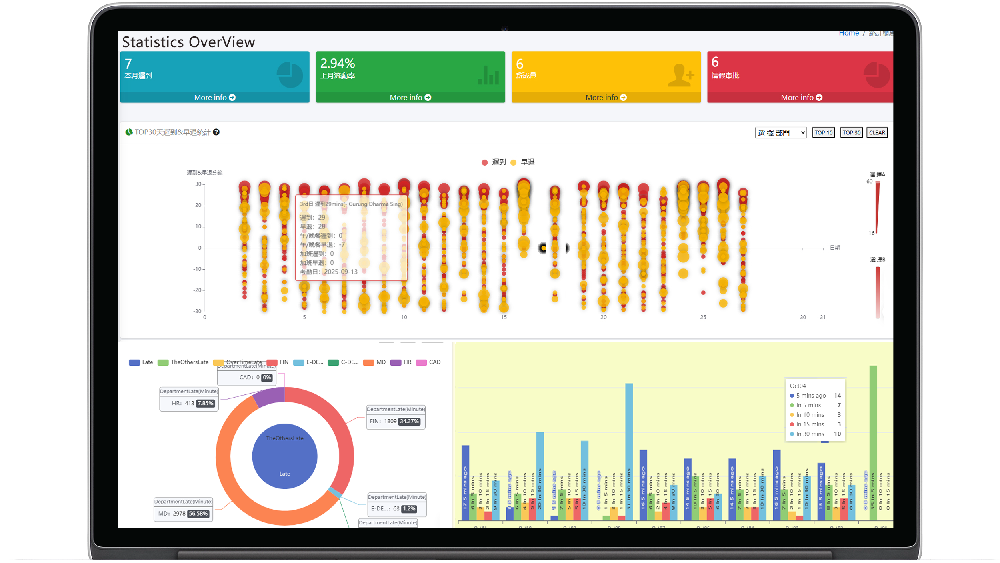
Time & Payroll Suite
Attendance, Payroll and Access Control Solution for Cost Reduction and Productivity Gains Details
All‑in‑one automated timekeeping and payroll system with robust, secure processes to guarantee payroll integrity. Includes leave management, shift rostering, multi‑site and chain support, multi‑ledger accounting, and comprehensive modules.
In today's fast-changing business environment, standardised security systems often fail to meet the unique needs of enterprises. Traditional CCTV systems can only passively record, but modern businesses require intelligent solutions that can proactively identify critical events and trigger real-time alerts. This article explores how to leverage edge device AI training to teach CCTV systems to recognise specific events (such as personnel falls or abandoned objects) and trigger custom alerts, thereby enhancing security efficiency and return on investment.
Why Custom Alert Training?
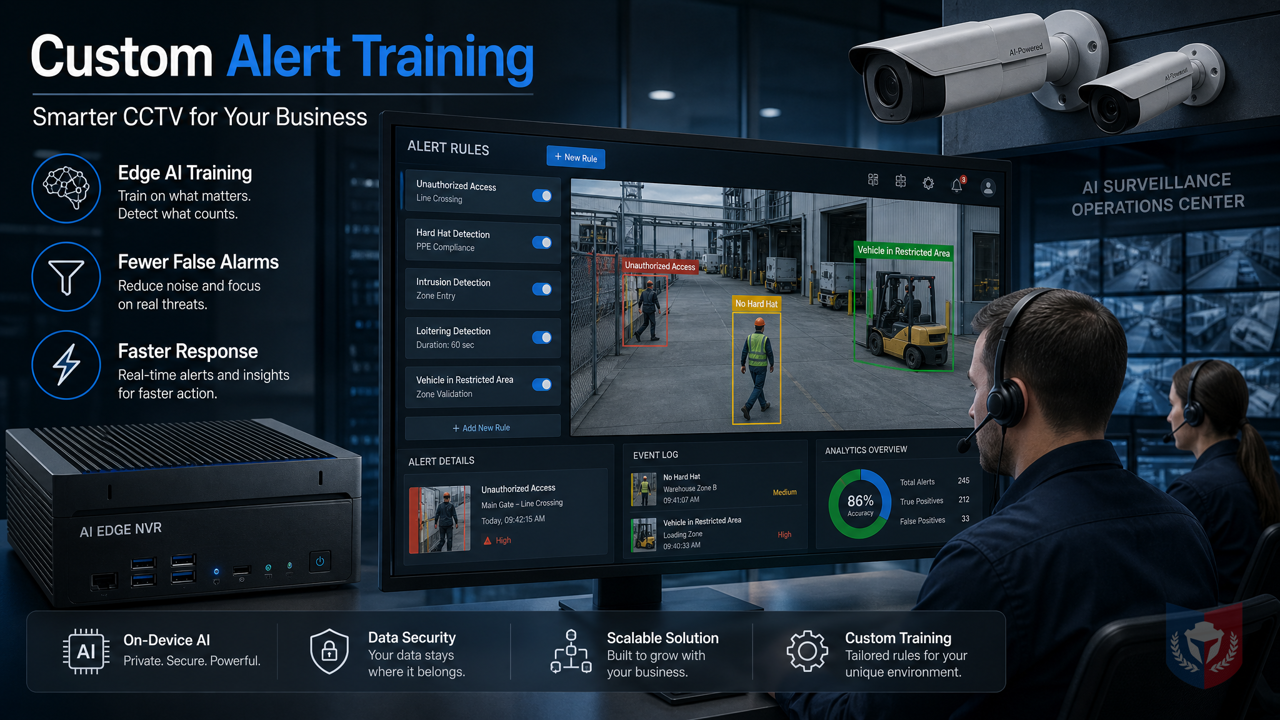
Every business scenario has its unique security risks. For example, retail stores may focus on theft, factories need to detect whether workers are wearing safety gear, and warehouses may worry about improper stacking of goods. Traditional motion detection or generic AI alerts often generate numerous false alarms, causing managers to waste time and even ignore genuinely important alerts.
Custom alert training addresses this pain point. By performing AI training on edge devices, enterprises can teach the system to recognise specific events and set alert rules according to business needs. This not only significantly reduces false alarms but also improves response speed, allowing security teams to focus on truly valuable alerts.
Advantages of Edge Computing
Edge computing brings AI processing power to the device level, offering several benefits:
- Real-time response: Data is processed locally without uploading to the cloud, resulting in near-zero latency in alert triggering.
- Privacy protection: Sensitive video data does not need to leave the premises, meeting compliance requirements.
- Bandwidth savings: Only valuable alert clips are transmitted, reducing network load.
- Offline operation: Even if the network is interrupted, the system can continue monitoring and alerting.
These advantages make edge computing an ideal platform for implementing custom alert training.
Practical Application Cases
Case 1: Retail Anti-theft
A retail chain deployed a CCTV system with AI training capabilities in its stores. They trained the system to recognise the behaviour of "customers putting items into backpacks" and trigger custom alerts to notify staff. As a result, theft incidents decreased by 40%, and staff could focus more on customer service.
Case 2: Factory Safety Compliance
A manufacturing plant needed to ensure workers wear helmets when entering hazardous areas. Through AI training, the system can detect "missing helmet" events and issue real-time alerts. This not only improves safety but also helps the factory comply with regulations and avoid fines.
Case 3: Warehouse Management
A logistics warehouse used custom alert training to monitor the risk of "goods stacked too high". When improper stacking is detected, the system immediately notifies management to adjust, preventing collapse accidents.
These cases demonstrate that custom alert training can flexibly adapt to the needs of different industries and deliver tangible business value.
Implementation Steps Overview
Implementing custom alert training does not require deep technical background and generally includes the following steps:
- Requirement analysis: Define the types of events to detect and alert rules.
- Data collection: Gather video samples of relevant events for training the AI model.
- Model training: Use built-in training tools on edge devices to teach the system to recognise specific events.
- Testing and optimisation: Test alert accuracy in the actual environment and adjust parameters based on feedback.
- Deployment and monitoring: Officially activate the system and regularly review alert logs for continuous improvement.
The entire process can typically be completed within days to weeks, depending on scene complexity.
Purchasing Considerations
When selecting a CCTV system that supports custom alert training, enterprises should consider the following points:
- Edge device computing power: Ensure the device has sufficient AI processing capability to support real-time training and inference.
- Ease of use of training tools: Choose a system with an intuitive interface that allows non-technical staff to operate easily.
- Alert integration capability: The system should integrate with existing alert notification channels (e.g., mobile app, email, SMS).
- Scalability: As the business grows, the system should support more cameras and more complex models.
- Vendor support: Choose a vendor that provides comprehensive technical support and update services.
ROI and Future Trends
Custom alert training is not just a technological upgrade but a strategic investment. By reducing false alarms and improving response speed, enterprises can lower labour costs, avoid losses, and improve operational efficiency. Based on actual cases, the payback period is typically within 6 to 12 months.
With the rise of AI personalisation, future CCTV systems will become more intelligent and tailored to user needs. Enterprises should seize the opportunity to leverage edge computing and AI training features to build truly customised security solutions.
In summary, custom alert training transforms CCTV systems from passive recording to proactive protection, making it a wise choice for enterprises to enhance their security levels.






























Featured Reviews
No reviews yet. Be the first to leave one.
Write a review
Supports bold and lists; do not paste external scripts or images
0 / 2000
Visible after review