New Retail Attendance Trends: Leveraging Store Attendance Data to Boost Operational Efficiency and Reduce Costs
Facing labour shortages and rising costs, how can retail chains use attendance data analytics to optimise scheduling and productivity? This article shares practical strategies and use cases from a business ROI perspective.
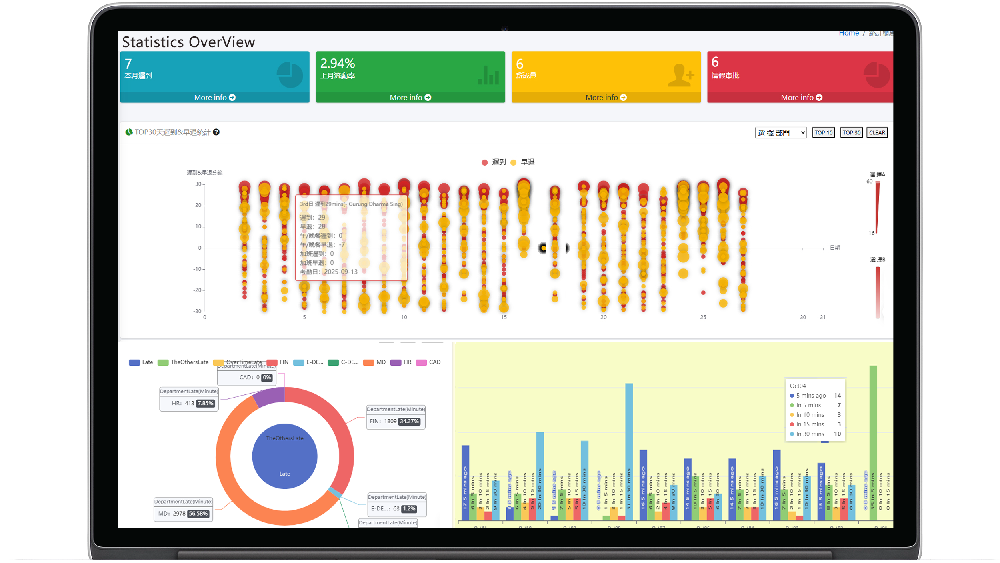
Time & Payroll Suite
Attendance, Payroll and Access Control Solution for Cost Reduction and Productivity Gains Details
All‑in‑one automated timekeeping and payroll system with robust, secure processes to guarantee payroll integrity. Includes leave management, shift rostering, multi‑site and chain support, multi‑ledger accounting, and comprehensive modules.
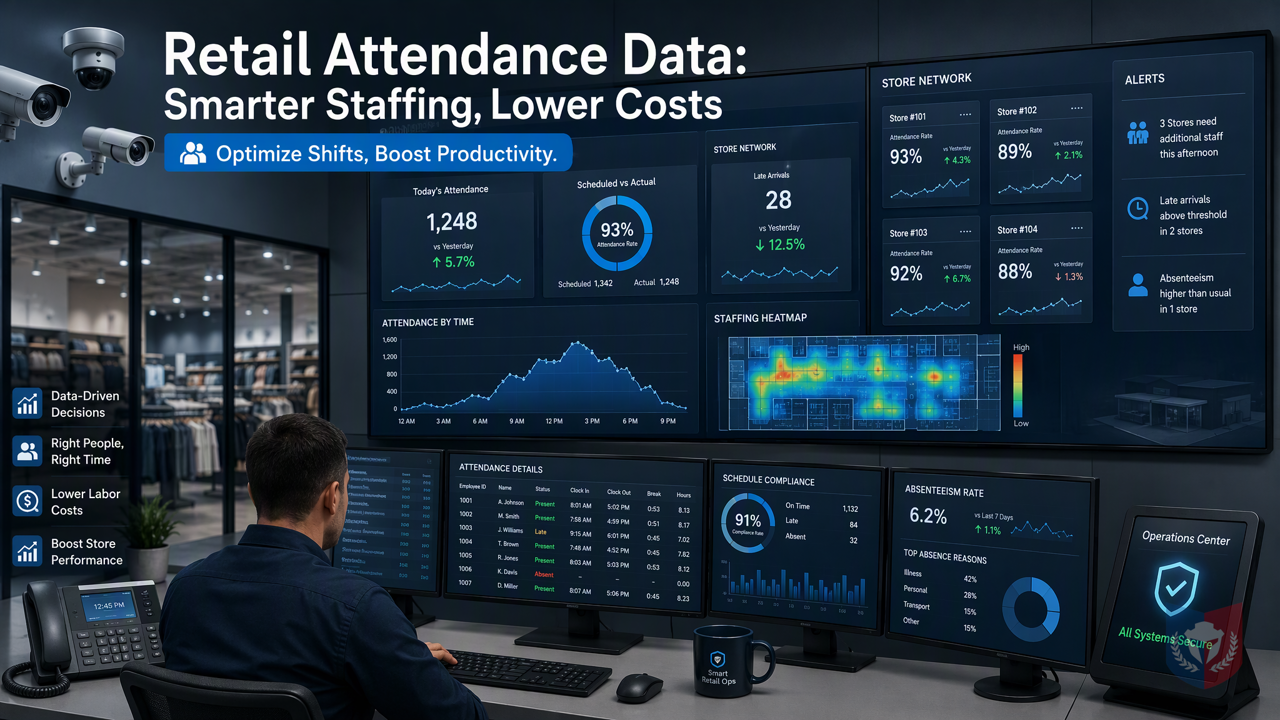
New Retail Attendance Trends: Leveraging Store Attendance Data to Boost Operational Efficiency and Reduce Costs
In the retail chain industry, labour costs often account for over 30% of operating expenses. Facing labour shortages, rising wages, and increasing customer expectations, business owners and operations directors must utilise every ounce of human resources more precisely. Store attendance systems generate vast amounts of data daily, but many enterprises only use it for payroll calculation, overlooking its business value. This article explores how to optimise manpower allocation and reduce operating costs through attendance data analytics, and shares practical use cases.
Attendance Data Is More Than Just Clock-in Records
Traditional attendance systems record employee clock-in and clock-out times, but modern solutions provide richer data dimensions, such as:
- Attendance rate and frequency of lateness/early leave
- Working hours distribution (manpower input during peak and off-peak periods)
- Overtime hours and approval processes
- Cross-store support and deployment records
If properly analysed, this data can reveal operational blind spots. For example, a store may have fewer staff on weekend afternoons during peak customer traffic, leading to degraded service quality; or some employees work long overtime but productivity does not improve, indicating issues with scheduling or work allocation.
Business Value of Data-Driven Decision Making
1. Precise Scheduling to Match Customer Flow Fluctuations
Retail customer flow has obvious time and seasonal patterns. By integrating attendance data with sales data, operations directors can identify the correlation between "manpower input" and "revenue". For instance, if a store has excess staff on weekday mornings from 10am to 12pm but is understaffed from 4pm to 6pm, scheduling can be adjusted to shift resources to busy periods. This not only improves customer experience but directly drives sales.
2. Control Overtime Costs and Enhance Compliance
Overtime is a common cost black hole in retail. Attendance data clearly shows overtime distribution, allowing management to set overtime caps and reduce unnecessary overtime through flexible scheduling. Meanwhile, systematic records help comply with labour regulations and reduce legal risks.
3. Link Performance with Attendance to Incentivise Productivity
Incorporating attendance data (such as attendance stability and punctuality) into performance evaluations encourages employees to be punctual and responsible. Furthermore, analysing the working hour patterns of high-performing employees can help replicate successful practices across other stores.
4. Cross-Store Manpower Deployment to Reduce Overall Costs
Chain enterprises often face sudden absenteeism at individual stores. Through a centralised attendance system, management can instantly view manpower status across stores and deploy nearby staff for support, avoiding operational impact due to understaffing and reducing the high cost of hiring temporary part-time staff.
Practical Use Cases
Scenario 1: Adjust Scheduling Based on Customer Flow Peaks
A retail clothing chain used attendance and POS data analysis to discover that Friday evenings and weekend afternoons were peak traffic periods. They redesigned the roster to increase staff during those times and scheduled administrative work during off-peak hours. As a result, weekend sales increased by 15% while overall working hours decreased by 5%.
Scenario 2: Identify Abnormal Attendance and Intervene Early
The system automatically flags employees with abnormal attendance (e.g., frequent lateness, unexplained absence), allowing supervisors to provide timely care and coaching, reducing service gaps caused by sudden manpower shortages.
Scenario 3: Optimise Part-time and Full-time Ratio
Analysing attendance data helps understand the minimum manpower required at different times, thus determining the optimal ratio of part-time to full-time staff. For example, if only a small number of staff are needed on weekday mornings, part-time workers can be hired; full-time staff are needed on weekends to maintain service quality. This balances cost and flexibility.
Business Considerations for Choosing an Attendance System
When selecting an attendance solution, retail chains should consider the following from a business ROI perspective:
- Integration capability: Can it interface with existing POS and ERP systems for data interoperability?
- Reporting and analytics: Does it provide intuitive dashboards for management to quickly grasp manpower efficiency?
- Mobile management: Can overtime approval and shift swapping be done via mobile, improving management efficiency?
- Scalability: As the number of stores increases, can the system easily scale?
- Compliance support: Does it comply with local labour regulations and automatically generate compliance reports?
Conclusion
In today's increasingly competitive retail landscape, store attendance data is an underutilised goldmine. Through attendance data analytics, enterprises can transform human resources into a competitive advantage, achieving precise scheduling, cost control, and productivity improvement. Business owners and operations directors should view attendance systems as strategic tools, not just clocking machines, to drive business growth.
Review your attendance data now to uncover hidden operational insights and maximise the return on every unit of manpower.
































Featured Reviews
No reviews yet. Be the first to leave one.
Write a review
Supports bold and lists; do not paste external scripts or images
0 / 2000
Visible after review