From Access to Payroll: How Integrated Attendance and Payroll Systems Reshape Enterprise Management
-
-
Author: Tony
-
24
- Wx Share
-
-
Modern enterprise management no longer relies on siloed spreadsheets and experience. An integrated HRMS that unifies attendance, scheduling, access control, and payroll turns people data into the foundation of decision-making.
-
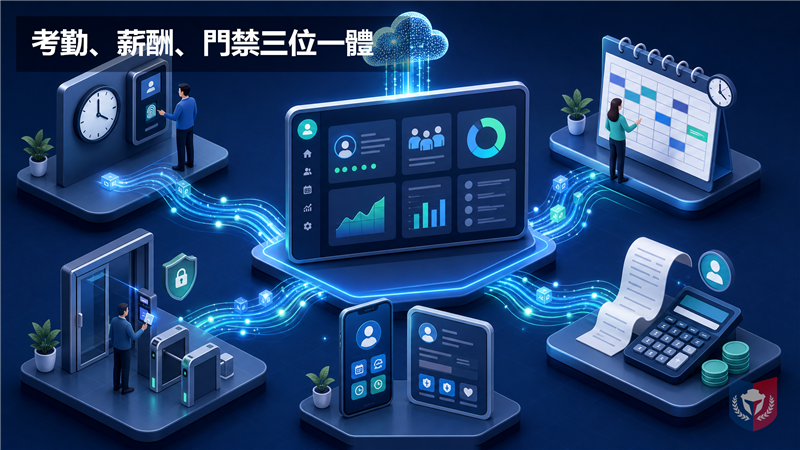
Time & Payroll Suite
Attendance, Payroll and Access Control Solution for Cost Reduction and Productivity Gains Details
All‑in‑one automated timekeeping and payroll system with robust, secure processes to guarantee payroll integrity. Includes leave management, shift rostering, multi‑site and chain support, multi‑ledger accounting, and comprehensive modules.
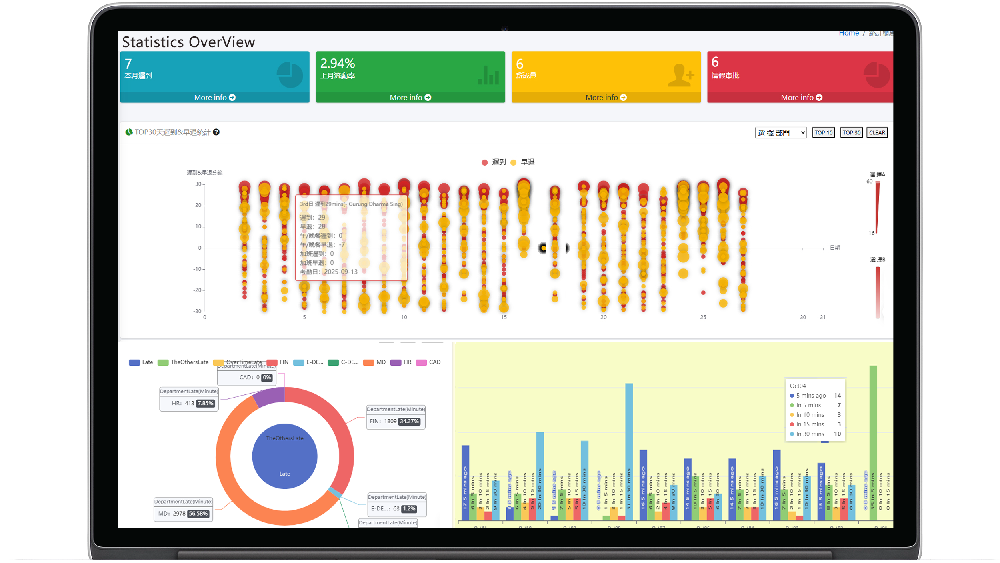
Breaking Down Silos: Let Data Flow Freely
In many organizations, HR, administration, and finance each hold their own "version of truth": HR has attendance sheets, admin has access logs, finance has payroll calculations. But these datasets often contradict each other, leading to time-consuming reconciliation at month-end. This isn't a people problem—it's a system architecture problem. When attendance, scheduling, access control, and payroll operate in silos, data cannot flow automatically, and human error and delays become inevitable.
An integrated attendance and payroll system is designed to solve this fundamental pain point. It connects all people-related data—from the moment an employee steps through the door to the moment their salary is credited—on a single data chain. Access control logs automatically become attendance data; attendance data triggers schedule adjustments; schedules impact payroll calculations; payroll results feed back into cost analysis. The entire process runs without manual intervention, ensuring every department sees the same "truth."
This closed-loop design not only reduces administrative burden but also gives management real-time visibility into the entire workforce. For example, if overtime hours in a department spike abnormally, the system alerts managers to investigate workload or scheduling issues. If an employee is repeatedly late, the system flags it for early intervention. These capabilities are impossible with traditional fragmented systems.
Data-Driven Decisions: Moving Beyond Gut Feel
In the past, managers relied on intuition and experience when making HR decisions. But intuition is prone to bias, and experience cannot keep pace with rapid market changes. Integrated systems provide real-time data that grounds decisions in fact.
For instance, by analyzing attendance and payroll data, management can identify which departments have excessive overtime costs, which time slots have the lowest productivity, and which employees' performance doesn't align with their hours. These insights can guide schedule optimization, hiring decisions, and even compensation structure adjustments. The system doesn't just record the past—it predicts the future. Through historical data analysis, it can forecast next month's overtime needs, attrition risks, and even suggest optimal salary adjustments.
Moreover, data-driven management enhances fairness. When all decisions are based on the same data set, employee skepticism diminishes because rules are transparent and outcomes traceable. For example, annual bonus calculations no longer depend on a manager's "impression" but on full-year attendance, performance, and project contributions, making employees feel that effort equals reward.
Encoding Rules: Transparent Policies
Company policies are often written in employee handbooks, but enforcement varies from person to person. Integrated systems "encode" policies, embedding rules into the system's code, automatically enforced and immutable. For example, overtime pay rules, leave approval workflows, and compensatory time caps can be configured and applied uniformly to all employees. This eliminates manipulation and clarifies the "rules of the game," enhancing trust in the system.
Take payroll as an example: traditional payroll is manually processed by finance staff, prone to errors and opacity. In an integrated system, payroll rules are pre-set, attendance data flows in automatically, and calculations are fully automated. Employees can view their salary details anytime through a self-service portal, including overtime hours, deductions, and bonus calculations. This transparency boosts satisfaction and reduces payroll disputes.
IoT and Real-Time Collaboration: Smart Operations
When attendance systems integrate with IoT devices, management boundaries expand. For example, smart access control can link with attendance: employees clock in via phone or RFID card, and the system records and updates the cloud instantly. Managers can check attendance anywhere, anytime, and even approve leave requests via mobile apps.
Furthermore, integrated systems can collaborate with other enterprise applications like ERP and CRM, forming a complete management ecosystem. For instance, when a project manager creates a new project in CRM, the system can assess required staffing and suggest schedules. When finance settles costs in ERP, the system can import payroll data to generate accurate cost reports. This cross-system synergy makes operations smoother and decisions more agile.
From Recording to Governance: A Leap in Value
In summary, the value of an integrated attendance and payroll system lies not in "recording" but in "connecting." It enables data to flow freely within the organization, shifts management from "after-the-fact accounting" to "real-time alerting," and transforms decision-making from "gut feeling" to "data-driven." This is not just a technology upgrade but a shift in management philosophy—recognizing people as "capital" rather than "cost," enforcing policies through "rule of law" rather than "rule of man," and basing decisions on "facts" rather than "intuition."
In today's fast-paced business environment, this transformation is not optional—it's essential. A truly modern HRMS is the key tool for enterprises to achieve this shift, enabling them to manage human resources with confidence and face future challenges head-on.
Software Service
Industry information
- Views 24
- Author :Tony Law
- Views 40
- Author :Tony Law
- Views 45
- Author :Bruce Lee
- Views 49
- Author :Tony
- Views 40
- Author :Ben Tsoi
- Views 62
- Author :Tony
- Views 312
- Author :Tony











Hardware & Software Support
We are deeply rooted in Hong Kong’s local services, specializing in hardware and software issues.
System Integration
Hardware and software system integration to enhance stability and reliability.
Technical Support
Professional technical team providing support.
Professional Technical Services
Focused on solving problems with cutting‑edge technologies.