How AI Artificial Intelligence Revolutionizes Access Control Security: Comprehensive Upgrades with Facial Recognition and Behavioral Analysis
With the rapid advancement of AI technology, traditional access control systems are undergoing revolutionary changes. This article explores how AI artificial intelligence significantly enhances access control security through technologies like facial recognition, behavioral analysis, and anomaly detection, offering smarter and more efficient solutions for building managers and security users.
Time & Payroll Suite
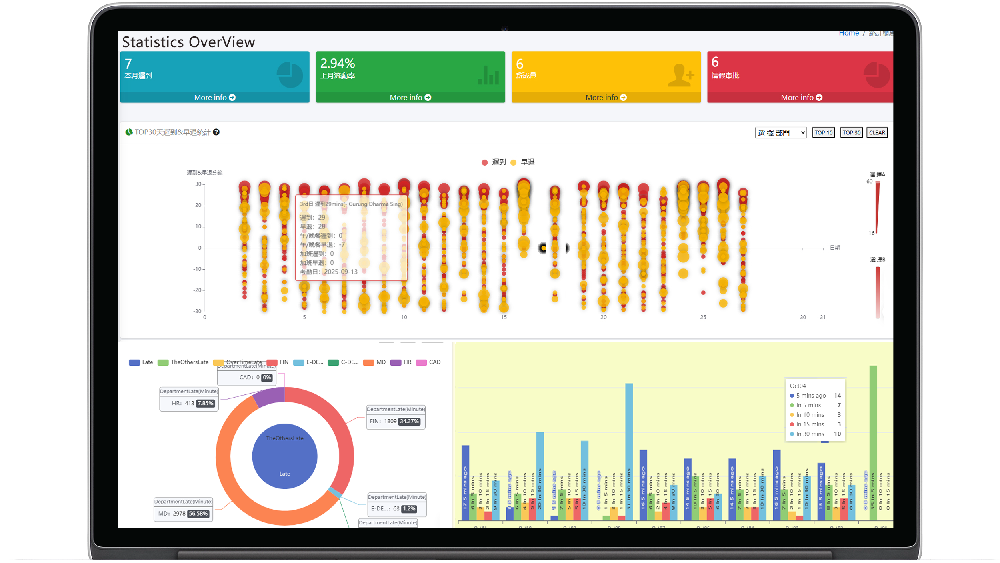
Attendance, Payroll and Access Control Solution for Cost Reduction and Productivity Gains Details
All‑in‑one automated timekeeping and payroll system with robust, secure processes to guarantee payroll integrity. Includes leave management, shift rostering, multi‑site and chain support, multi‑ledger accounting, and comprehensive modules.
The Application Trends of AI Artificial Intelligence in Access Control Systems
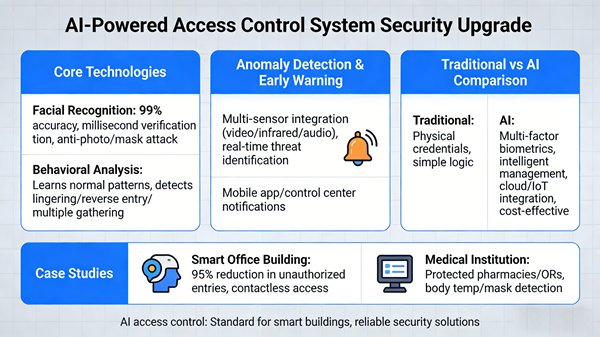
With continuous technological advancements, AI artificial intelligence has become the core driving force of modern security systems. Traditional access control systems primarily rely on single verification methods such as cards, passwords, or fingerprints, which carry risks of loss, theft, or forgery. In contrast, intelligent access control systems based on AI artificial intelligence, by integrating advanced technologies like facial recognition, behavioral analysis, and anomaly detection, not only enhance security but also optimize user experience and management efficiency.
The Accuracy and Speed Advantages of AI Facial Recognition Technology
AI facial recognition technology is a key component of intelligent access control systems. Compared to traditional methods, AI-driven facial recognition systems offer the following advantages:
- High Accuracy: AI algorithms can accurately recognize faces in complex environments (such as varying lighting, obstructions, or multiple angles), with a false acceptance rate below 0.1%, far exceeding human visual recognition capabilities.
- Fast Response: The system can complete identity verification within milliseconds, supporting seamless passage in high-traffic scenarios and reducing queue waiting times.
- Liveness Detection: Combined with deep learning, AI can effectively distinguish between real persons and photos, videos, or masks, preventing spoofing attacks and enhancing the reliability of AI access control system security enhancement solutions.
For example, after deploying an AI facial recognition access control system in a commercial building, employee passage efficiency increased by 30%, while unauthorized intrusion incidents decreased by 95%.
How Behavioral Analysis Enhances Security Levels
Behavioral analysis is another innovative application of AI in security systems. By monitoring camera and sensor data, AI systems can learn normal behavior patterns and detect anomalous activities:
- Pattern Recognition: AI can analyze personnel movement trajectories, dwell times, and interaction behaviors to identify potential threats (such as tailgating, loitering, or violent acts).
- Real-Time Monitoring: The system continuously scans the environment, triggering alarms immediately upon detecting suspicious behavior, helping managers respond quickly.
- Adaptive Learning: Over time, AI models continuously optimize, adapting to new security challenges and ensuring that the security system remains efficient.
This technology is particularly suitable for high-security venues such as banks, data centers, or government agencies, providing an additional layer of protection for AI access control system security enhancement solutions.
Anomaly Detection and Real-Time Alert Functions
Anomaly detection is a core function of AI access control systems, using data analysis to predict and prevent security incidents:
- Multi-Source Data Fusion: AI integrates data from access card readers, cameras, sensors, and log systems to build a comprehensive security view.
- Predictive Alerts: The system can identify abnormal patterns (such as access attempts during non-working hours or multiple verification failures) and issue early warnings to prevent potential intrusions.
- Automated Response: When a threat is detected, AI can automatically lock down areas, notify security personnel, or initiate emergency protocols, reducing human delays.
For instance, in a smart office building, an AI system detected a visitor loitering in a sensitive area and immediately sent an alert to administrators, preventing a possible data breach incident.
Comparison with Traditional Access Control Systems
Traditional access control systems and AI-driven systems show significant differences in security, efficiency, and cost:
- Security: Traditional systems rely on static credentials (e.g., cards), which are easily copied or lost; AI systems use dynamic biometric features (e.g., facial recognition) and behavioral analysis, providing multi-layered protection.
- Efficiency: Traditional verification processes are slower and may cause congestion; AI enables contactless rapid passage, enhancing user experience.
- Cost: Although AI systems require higher initial investment, in the long run, their advantages in reducing human monitoring and incident losses result in lower total cost of ownership.
According to market research, the adoption rate of AI access control systems is growing at 20% annually, reflecting their commercial value and security advantages.
Real-World Application Case Studies
Globally, AI access control systems have been successfully applied in various scenarios:
- Commercial Buildings: A high-end office building in Hong Kong deployed an integrated facial recognition and behavioral analysis AI access control system, which not only improved security levels but also optimized space usage through data analysis, saving 15% in operational costs.
- Healthcare Facilities: A hospital used an AI system to monitor personnel access, effectively preventing unauthorized entry into sensitive areas while ensuring patient privacy.
- Educational Institutions: Schools adopted AI access control systems combined with anomaly detection to promptly block external threats, ensuring campus safety.
These cases demonstrate that AI artificial intelligence not only enhances the security of access control systems but also brings significant commercial benefits, such as increased operational efficiency, reduced risks, and enhanced user trust.
Conclusion
AI artificial intelligence is fundamentally transforming the security landscape of access control systems. Through technologies like facial recognition, behavioral analysis, and anomaly detection, intelligent security systems provide more accurate, fast, and adaptive protection. For building managers, security users, and technology enthusiasts, adopting AI-driven access control systems is not just a technological upgrade but an inevitable trend in future security management. As technology continues to evolve, we can expect more advanced AI access control system security enhancement solutions, bringing unprecedented security levels to buildings and facilities worldwide.
































Featured comments
No comments yet. Be the first.
Leave a comment
Bold and lists OK; no external scripts or images
0 / 2000
Comments appear after moderation